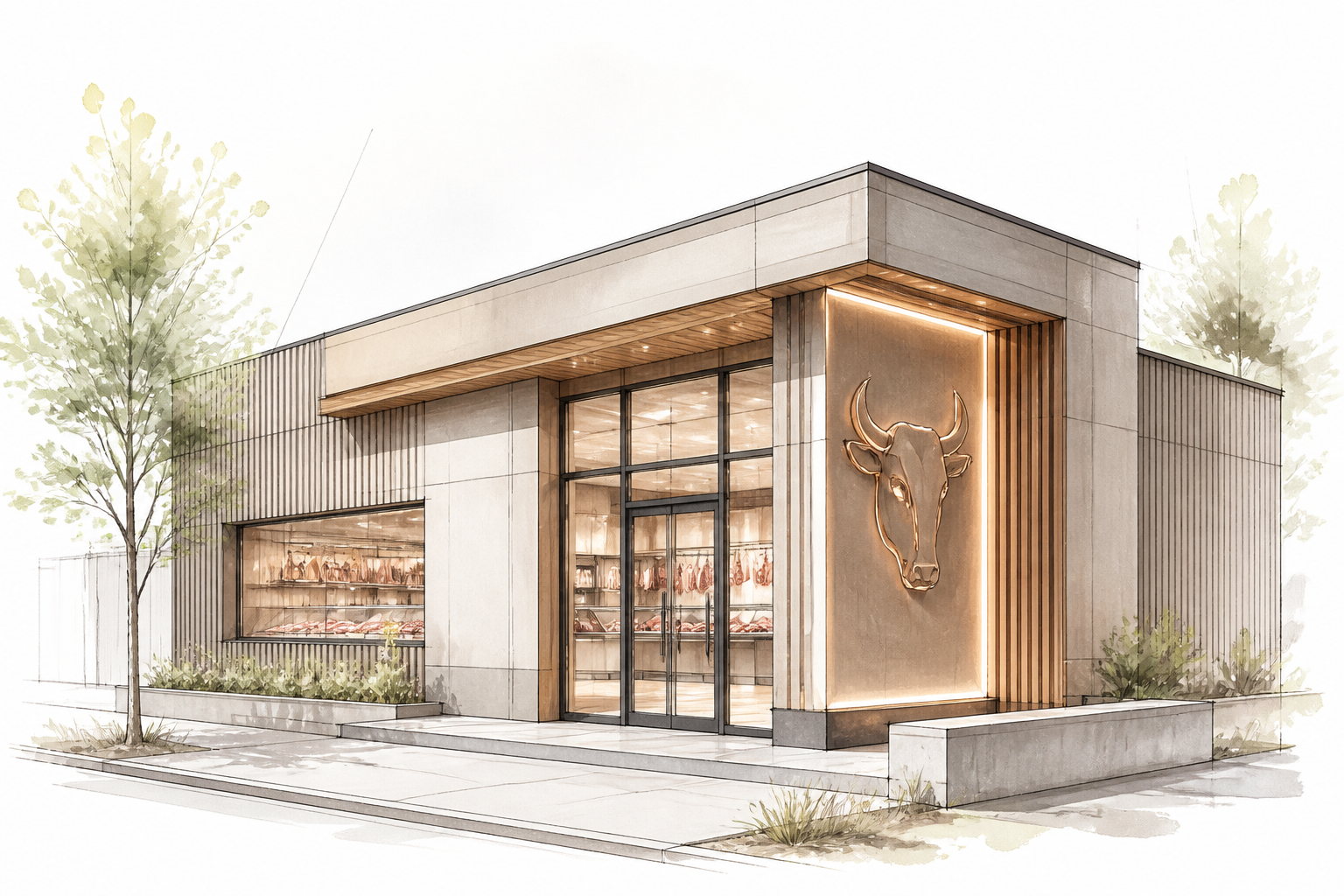
Butcher Shop Financial Model
Description
The model covers the full cycle from whole-carcass purchasing through precise breakdown into retail cuts, sub-primals, and trim. It incorporates a detailed yield matrix by species (beef, pork, lamb, poultry) and primal, automatically calculating the cost allocation to each resulting cut based on market value or weight-based methods. By-products such as bones, fat, and offal are treated as either revenue streams or disposal costs, reflecting their true economic impact.
Inventory management is built around the perishable nature of fresh meat. The model tracks shelf life by batch, applies spoilage percentages that increase as inventory ages, and allows for price markdown strategies on items approaching expiration. A fresh-to-frozen conversion logic helps balance supply and demand, while daily demand curves and lead time variability in carcass ordering prevent chronic overstocking or stockouts. All of this directly influences the cash conversion cycle and working capital needs.
On the operational side, the model ties staffing to production volumes: skilled butchers for cutting and processing, counter staff for peak selling hours, and managerial roles. Equipment loads for grinders, slicers, and vacuum packers are linked to throughput, driving maintenance schedules and utility consumption. Built-in scenarios let you compare conventional, organic, or halal product lines, as well as a shift toward case-ready pre-packaged meat, giving a granular view of margins and resource requirements.
Modeling specifics
- Primal cutting yield engine: users define percentage yields for each cut based on carcass weight; model automatically distributes primal cost across all resulting products, accounting for trim and by-products.
- Perishable inventory aging: tracks every batch of fresh meat by days on shelf, applies non-linear spoilage rates, and triggers markdown or freeze actions when a batch exceeds its optimal window.
- Dynamic pricing for aging inventory: allows setting tiered discounts for near-expiry items, with those markdowns flowing through to revenue and margin reporting, showing the true cost of waste vs. clearance.
- Staff scheduling tied to production rhythm: butchers' hours are linked to morning breakdown and processing volumes, while sales staff adjust to daily and weekly footfall patterns, preventing overstaffing during slow hours.
- Cut-level gross margin analysis: calculates profit per kilogram for every retail cut, factoring in yield, labor content, and packaging, enabling data-driven decisions about product mix and pricing.
- Scenario selector for product line strategies (conventional, organic, halal, case-ready): automates underlying changes in sourcing cost, yield, customer demand elasticity, and certification compliance costs.
- Capacity constraints on hanging/cutting space: sets maximum carcasses per day and cold storage limits, generating bottleneck alerts and investment triggers when demand exceeds physical capacity.
What's included in the base version
- Revenue projection module with 20+ custom product categories
- COGS engine integrating primal cost, yield matrix, and spoilage/waste
- Fresh and frozen inventory management with aging and reorder logic
- Spoilage & markdown module with configurable shelf-life policies
- Staffing plan: butchers, sales, management, with role-based wage rates and shift patterns
- Operating expenses schedule (rent, utilities, equipment maintenance, packaging, compliance)
- Capital expenditure plan: initial shop fit-out, refrigeration, cutting equipment, POS
- Financial statements: monthly P&L, cash flow, balance sheet (5-year horizon)
- Break-even analysis and key performance indicators (GM%, EBITDA%, cash days)
- Sensitivity tables for key drivers: carcass price, yield, footfall, average transaction value
Common modeling mistakes
- Ignoring yield losses during breakdown — gross margin is overstated by 18–30% for beef and 12–22% for pork/lamb, and COGS is understated, making the business appear far more profitable than reality.
- Treating all meat as non-perishable and omitting spoilage — inflates inventory value on the balance sheet and boosts net profit by 8–15% while hiding the cash drain from unsold product.
- Using a flat demand assumption for all cuts — leads to a stockpile of low-demand cuts (e.g., chuck, shoulder) that eventually spoil, while 10–20% of potential sales of premium cuts are lost due to insufficient inventory.
- Modeling labor as a variable cost proportional to revenue rather than production steps — understates payroll by 25–40% because skilled butchers' hours are driven by carcass volume, not by sales rings.
- Neglecting seasonal demand swings (grilling season, holidays) — quarterly P&L shows artificial smoothing, while in reality working capital pressure in low seasons can be 2–3x the average month, causing liquidity shortages.
- Excluding by-product revenue from bones/fat/offal — loses a revenue stream that can cover 3–7% of total operational expenses, or conversely hides additional disposal costs, distorting the true unit economics.