Commercial Cut Flower Plantation Financial Model
Description
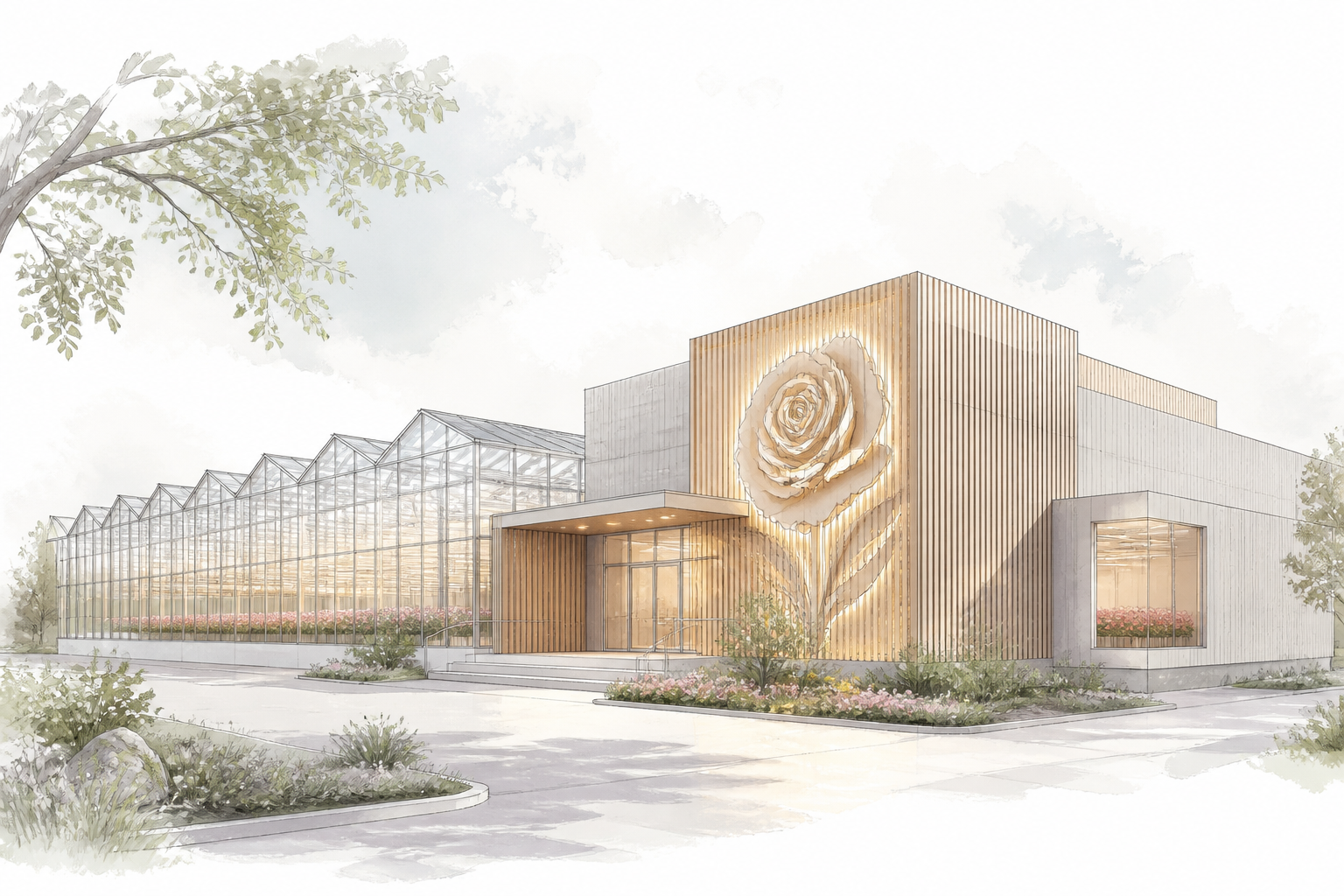
A full-cycle model for a commercial cut flower operation, covering protected and open-field production for wholesale, florist, and export channels. It captures every stage — from propagation beds and greenhouse infrastructure through harvesting, grading, packing, and cold-chain delivery — to give you a realistic representation of profits and cash needs across multiple growing seasons.
The planting schedule handles multiple cultivars (roses, chrysanthemums, alstroemeria, snapdragons, and more) with staggered cropping, photoperiodic lighting, and fertigation management. Yield dynamics are driven by stem curves per flush, while grading (A1, A2, B) and post-harvest losses at each cold-chain step directly shape the revenue stream.
Every operational driver has its own lever: seasonal price premiums, piece‑rate and shift labor, packhouse throughput constraints, energy for cooling and supplemental lighting, and even royalties on patented varieties. For a typical investment in the order of $1M–$10M (illustrative order of magnitude), the model delivers granular monthly projections and standard return metrics.
Modeling specifics
- Cultivar‑specific yield curves: stem production is modeled per flush over the crop lifecycle, not as a flat annual average, so early-year revenue expectations stay realistic.
- Stochastic grade‑out distribution: each harvest is automatically split into export A1, domestic A2, and B grades using configurable percentage bands, affecting average selling price.
- Cold‑chain loss cascade: ethylene damage and temperature abuse are tracked from packhouse to cold store to transport, with separate loss factors that reduce marketable volume.
- Seasonal price curves: each flower type and market has its own monthly price index, capturing Valentine’s, Mother’s Day, wedding season, and other peaks — eliminating flat‑pricing errors.
- Photoperiodic lighting engine: for day‑length‑sensitive crops, the model adds supplemental lighting hours and electricity costs based on planting week and latitude, linking capex and opex.
- Packhouse throughput constraint: hourly stem‑processing capacity limits daily output; exceeding it triggers overtime cost, shift adjustments, and potential cold‑storage bottlenecks.
- Piece‑rate and shift labor: harvest labor is driven by stems picked per hour, piece‑rate premiums, and seasonal availability; permanent staff are scheduled with shift calendars.
- Closed‑loop fertigation: recirculating irrigation with drainage recovery and nutrient dosing is modeled, with water and fertilizer costs tied to source tariffs and recipe requirements.
What's included in the base version
- Revenue build‑up: stems sold by cultivar, grade, market; monthly price curves and seasonal premiums.
- Crop calendar: perpetual planting schedule, growth durations, yield curves, and harvest windows for all varieties.
- Post‑harvest handling: grading split by quality, cold‑chain loss factors (configurable), packaging materials and labor per stem.
- Opex: direct inputs (plants, growing media, fertilizers, chemicals), energy & water, packing, logistics, sales commissions, royalties, permanent and seasonal labor.
- Capex schedule: land preparation, greenhouses/tunnels, irrigation, cold rooms, packhouse equipment, machinery, and vehicles.
- Financing: equity injections, senior debt drawdowns, interest, and principal repayment.
- Three‑statement model: monthly profit & loss, cash flow, and balance sheet, with automatic checks.
- Investment returns: NPV, IRR, project payback, debt service coverage ratios.
Common modeling mistakes
- Treating yield as a constant annual figure instead of a ramp‑up flush‑by‑flush — overestimates first‑year revenue by 30–50%.
- Ignoring grade‑out and selling everything at top price — overvalues total revenue by 15–30%.
- Omitting cold‑chain losses from ethylene and temperature excursions — inflates sellable volume by 10–20%.
- Using a flat annual price per stem instead of seasonal indices — distorts monthly cash flow and underestimates peak working capital needs by up to 25%.
- Failing to model soil steam sterilization or fumigation downtime between cycles — understates plantation idle time and replant costs, leading to a 10–15% revenue overstatement.