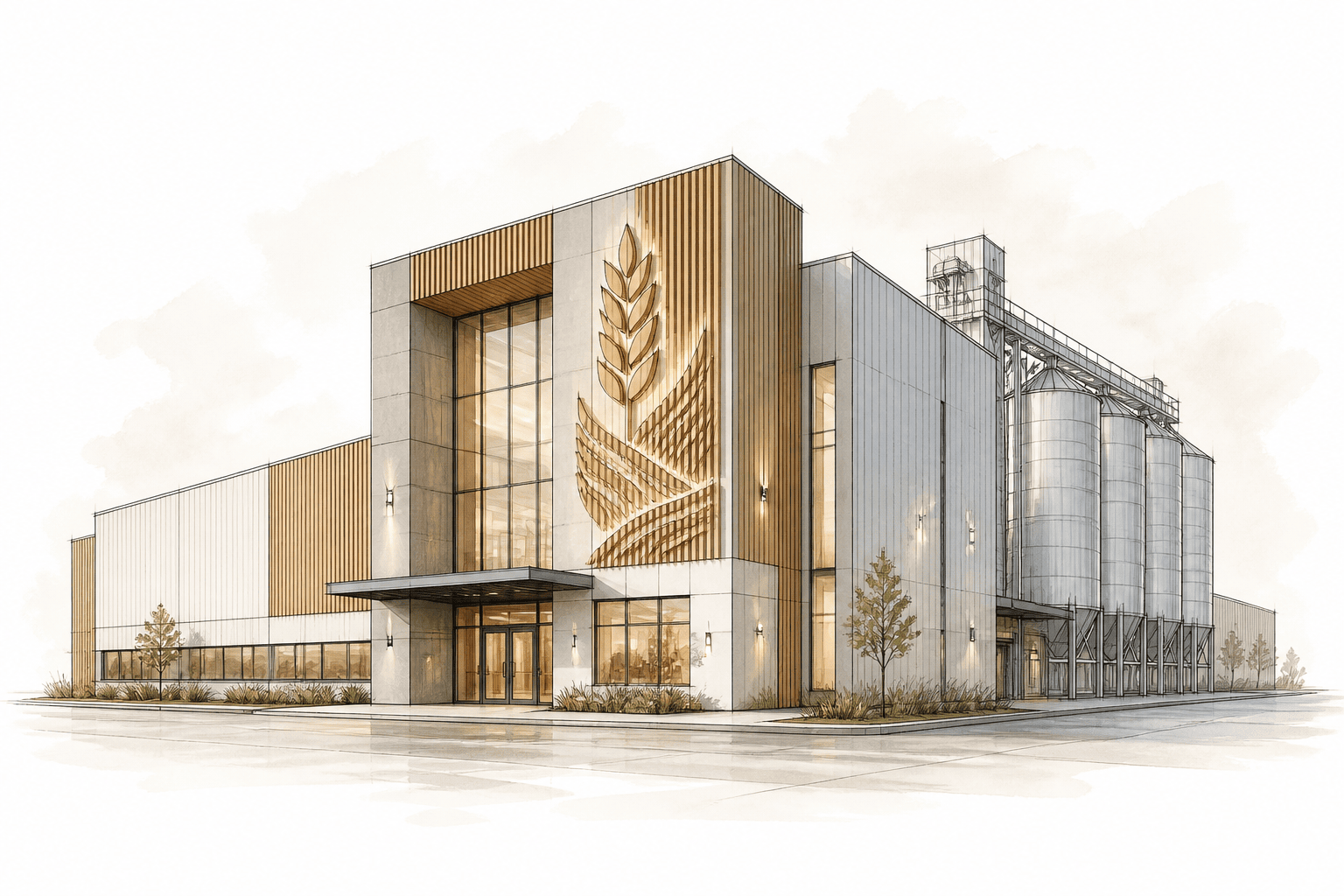
Compound Feed Plant for Farm Animals Financial Model
Description
The model faithfully replicates a full-cycle compound feed manufacturing plant, from raw material intake and laboratory quality checks through grinding, mixing, conditioning, pelleting, cooling, and final packaging in bags, big‑bags, or bulk loading. It covers all key production stages and the associated auxiliary systems (dust collection, steam generation, compressed air) so that the user sees how each ton of feed translates into direct and indirect costs.
A central feature is the recipe formulation matrix covering multiple farm animal species and growth phases — broiler starter, grower, finisher for poultry; pre‑starter, starter, fattening for pigs; and concentrates for dairy and beef cattle. The model dynamically selects least‑cost ingredient blends subject to nutritional constraints, reflecting real‑world substitution among grains, oilseed meals, amino acids, and micro‑ingredients.
Raw material supply is modeled with monthly seasonality curves for key commodities, allowing the user to capture pre‑buying strategies, bulk discount structures, and silo storage constraints. By‑products such as screenings and dust are tracked separately and can be sold or recycled, directly affecting net ingredient cost and waste disposal expenses.
Capital expenditures are phased over the construction period with progress-payment milestones, retention amounts, and an explicit commissioning ramp‑up. The model also handles multiple energy vectors (electricity, natural gas, diesel) with consumption rates per processing stage, planned maintenance shutdowns, and the resulting impact on available capacity to ensure that operating dynamics realistically reflect plant floor complexities.
Modeling specifics
- Least‑cost recipe formulation solver: the model emulates nutrient‑constrained ingredient substitution using linear‑programming logic within Excel, enabling real‑time feed cost optimization as raw material prices change.
- Physical silo and warehouse inventory tracking with minimum/maximum stock levels, re‑order triggers, and handling of multiple commodity types stored in dedicated cells — prevents over‑booking of storage capacity.
- Seasonal raw material price and demand curves: independent monthly indices for each major ingredient and product line, driving procurement timing and finished‑feed sales volumes.
- Energy‑per‑ton regression module: electricity, gas, and steam consumption are modeled as a function of actual throughput for grinding, mixing, pelleting, and cooling stages, with idle‑load baseload separation.
- Changeover matrix and cleanout downtime: transition times between different species recipes (e.g., medicated vs. non‑medicated) are accounted for, reducing net available capacity and affecting delivery schedules.
- By‑product and waste stream valuation: screen‑box waste, dust collector fines, and rework loops are tracked physically and financially, with the option to sell by‑products or return them to the process — this directly adjusts ingredient yield and raw material cost.
- Multi‑format packaging and logistics: the model splits output into bagged, big‑bag, and bulk loading, each with specific packaging material costs, labor, and warehousing requirements, feeding into separate revenue streams.
- Capital‑expenditure phasing with milestone‑based progress payments and retention: equipment contracts are structured with advance, delivery, installation, and commissioning payments, reflecting real‑world cash flow timing and the impact on financing drawdowns.
What's included in the base version
- Complete equipment list with unit capacities, pricing, and depreciation schedule
- Phased CAPEX plan with construction milestones and retention payments
- Raw material inventory management with seasonality curves and re‑order logic
- Recipe formulation matrix for at least 5 species and 15 growth stages
- Production schedule model covering grinding, mixing, pelleting, cooling, and packaging lines
- Personnel plan with shift patterns, skill grades, and payroll costs
- Revenue model by product format (bags, big‑bags, bulk) and customer channel
- Variable energy consumption tied to throughput per processing stage
- Working capital financing including raw material supplier credit and customer payment terms
- Full financial statements (P&L, Cash Flow, Balance Sheet) and standard investment metrics (NPV, IRR, Payback)
- Sensitivity and scenario analysis for raw material cost, selling price, and capacity utilization
Common modeling mistakes
- Assuming constant raw material prices and ignoring seasonal cycles — underestimates peak working capital requirement by 25–35%.
- Modeling pelleting energy as a fixed monthly expense instead of a load-dependent variable — overestimates per‑ton energy cost by 15–20% when utilization drops below 70%.
- Neglecting by-product streams (screenings, dust) — understates total revenue by 1–3%.
- Ignoring changeover and cleanout downtime between batches for different species — inflates effective capacity by 10–15%.
- Treating silos as infinite storage with no fill/draw dynamics — overstates inventory turnover by 20–30% and underestimates storage-related costs.