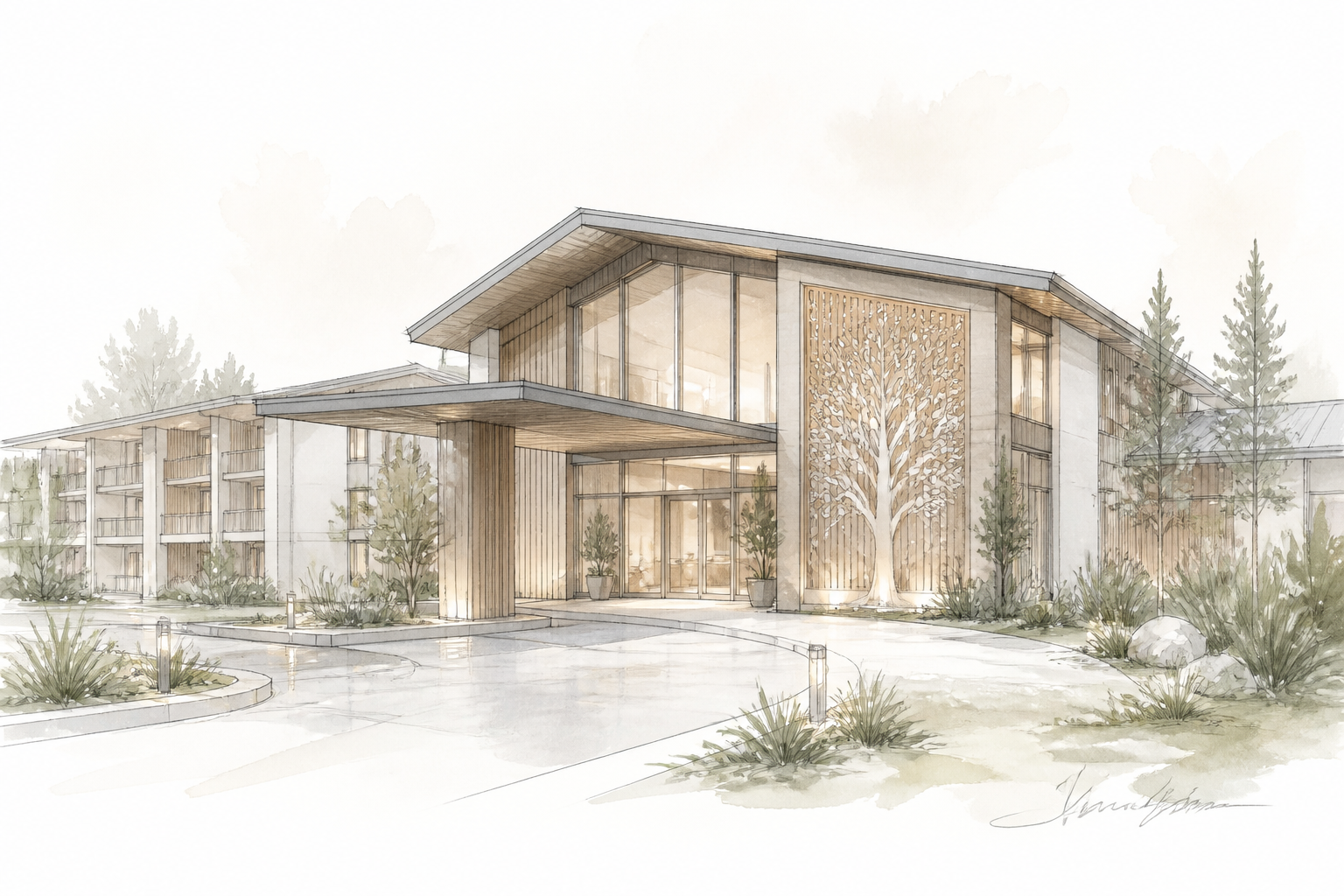
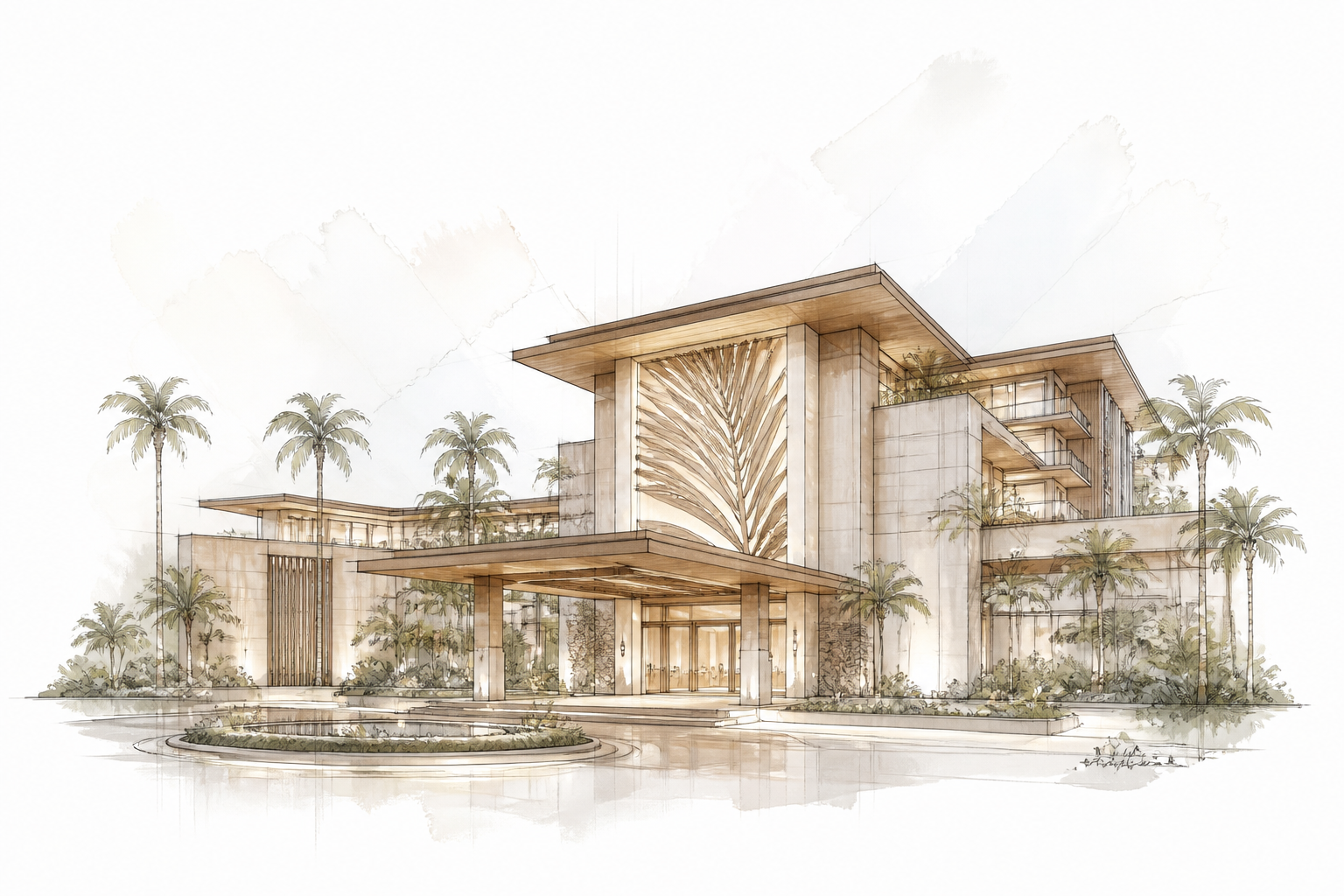
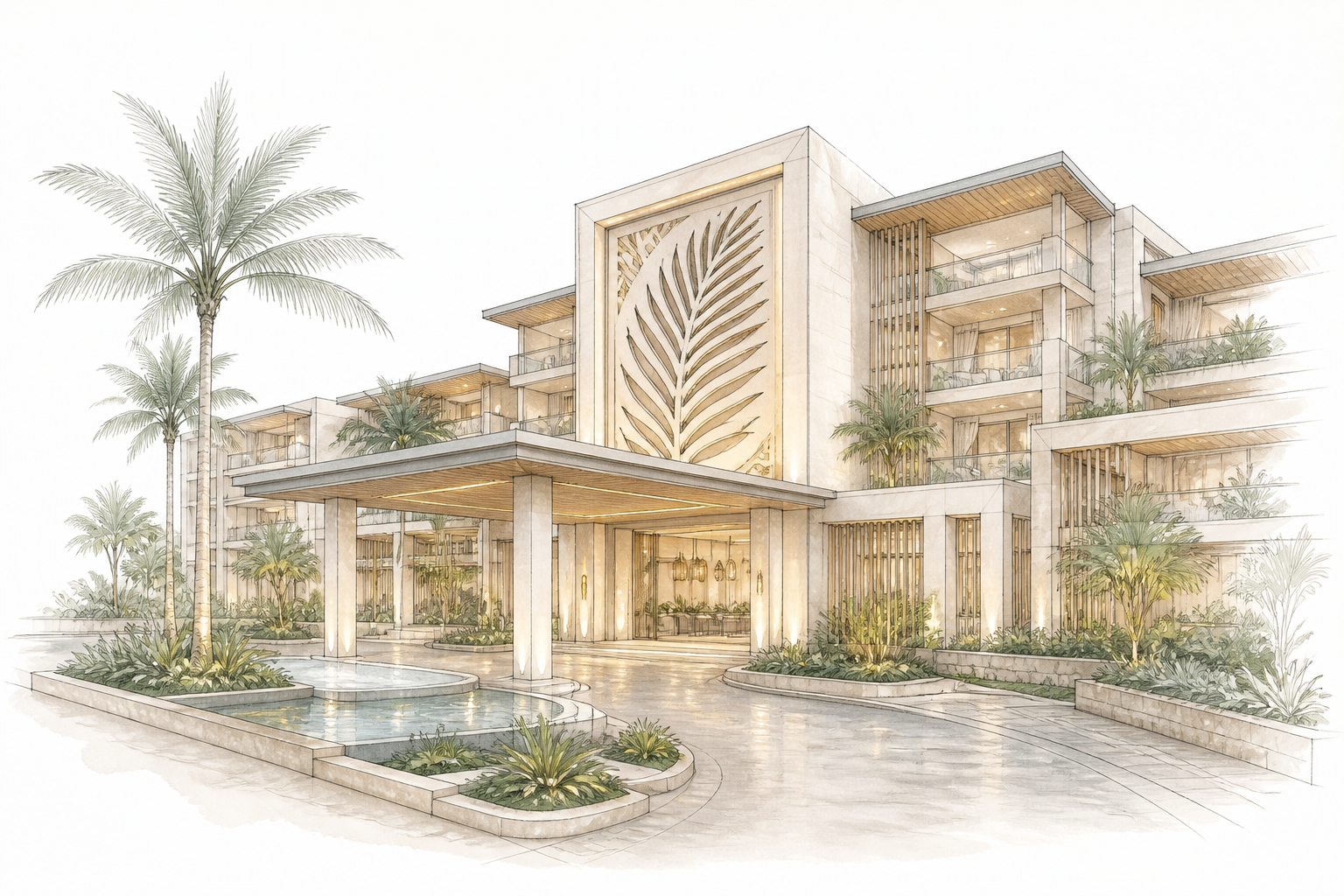
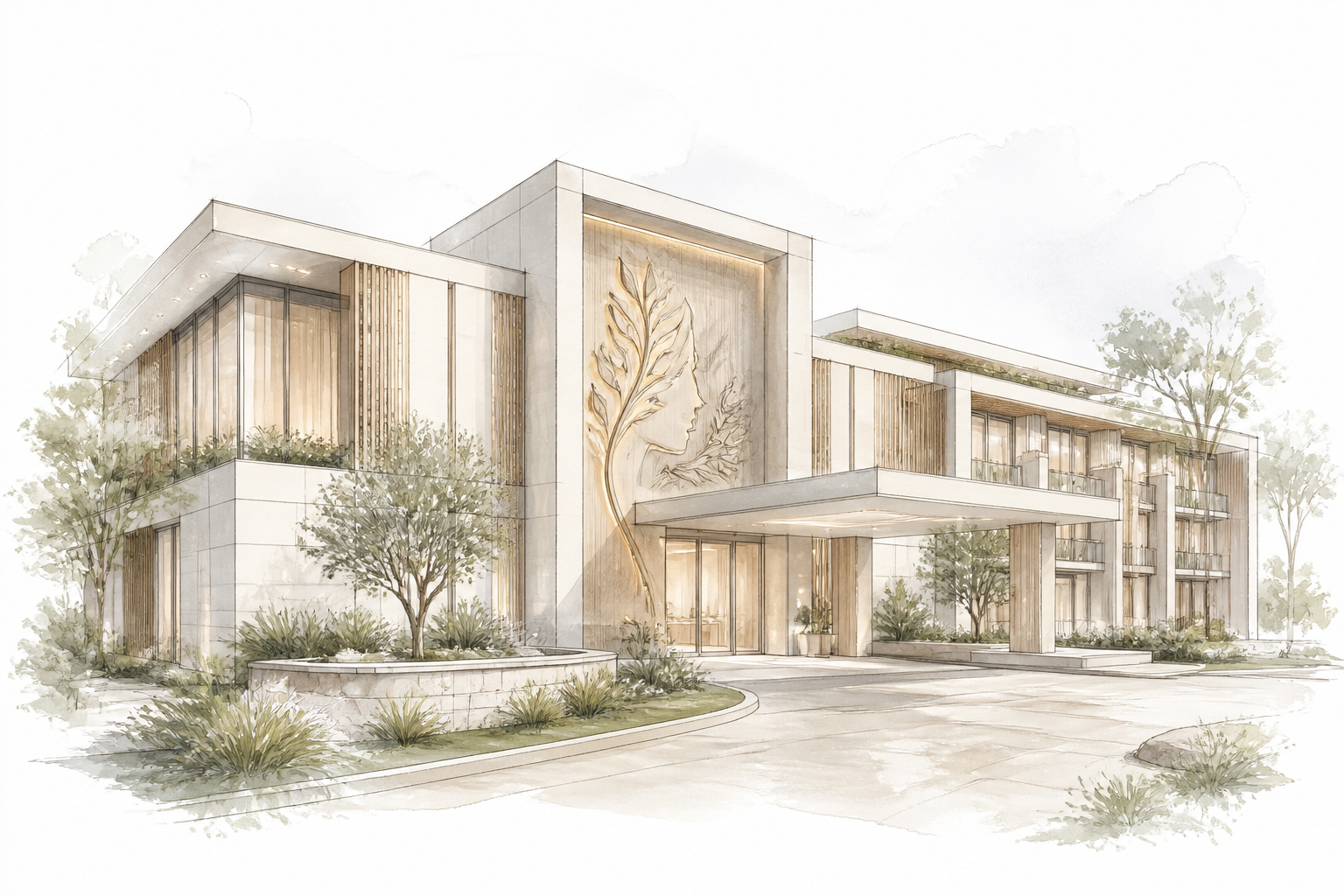
Countryside Hotel Complex Financial Model
Description
This model captures the financial logic of a multi-building countryside hotel complex with a wide range of revenue centers beyond standard room sales — including a full-service restaurant, bar, spa, outdoor pools, and flexible event spaces. It is designed for projects where the business unfolds gradually: a construction phase of 12–24 months is followed by a structured operational ramp-up across several years, with seasonality shaping both occupancy and staffing each month.
Unlike urban hotel templates, the model explicitly accounts for the infrastructure unique to a rural location — autonomous water supply, wastewater treatment, backup power, access roads, and landscaping. It separates capital expenditures into civil works, buildings, FF&E, and pre-opening costs, while allowing the user to schedule investments in later amenities (a barn for weddings, glamping units, or a wellness wing) as distinct phases with their own timelines and financing.
On the operations side, the model breaks down revenue into room nights (by category and dynamic pricing), covers and average check for each F&B outlet, treatment room utilization for the spa, and day-pass/rental income for recreational facilities. Staffing is linked to occupancy and covers seasonal peaks, with separate assumptions for local vs. specialist personnel. The result is a fully integrated P&L, cash flow, and debt service forecast that reflects the real cash cycles of a countryside property — including working capital for advance bookings, supplier credit, and maintenance reserves for remote infrastructure.
Modeling specifics
- Seasonal occupancy curve with monthly granularity — multiple room categories each have their own base occupancy, ADR, and dynamic pricing multipliers for low, shoulder, and high seasons, preventing uniform annualized assumptions.
- Multi-outlet F&B model — each venue (restaurant, bar, poolside cafe, room service, event catering) carries its own covers, average check, COGS percentage, and direct labor, because a banquet has a fundamentally different margin structure than an à la carte dinner.
- Spa & wellness center utilization logic — treatment rooms are modeled with session duration, therapist-to-room ratios, and non-linear capacity constraints, so revenue does not scale linearly with the number of rooms.
- Phased CapEx with in-construction financing — the user can define multiple asset blocks (main building, spa, landscaping, staff housing) with independent start dates and construction periods, and the model correctly capitalizes interest during construction per phase.
- Remote infrastructure OPEX & maintenance reserve — explicit line items for well/pump maintenance, septic system servicing, generator fuel and upkeep, road grading, and snow clearing, tied to asset age and usage, avoiding the typical urban-hotel bias that omits these costs.
- Staffing engine driven by operational schedule — headcount for housekeeping, F&B, spa, and groundskeeping rises and falls with occupancy levels and seasonal facility hours, while specialist roles (e.g., sommelier, spa manager) are fixed but can be phased in with expansion.
What's included in the base version
- Comprehensive assumptions dashboard with macro drivers, yield management parameters, and cost inflation indices
- Room revenue schedule with dynamic pricing by season and room category, including OTA commissions and net ADR
- F&B and other operated departments revenue model (restaurant, bar, in-room dining, spa, recreation, events baseline)
- Operating expense model split into fixed, variable, and semi-variable, with maintenance and utility reserves
- Staffing plan with seasonal scaling, department-level headcount, and full burden costs
- Capital expenditure schedule with pre-opening, construction, FF&E, and IT, plus replacement reserve (capex reserve)
- Debt & equity financing module with flexible drawdowns, interest-only period, and sculpted or equal amortization
- Integrated financial statements (monthly P&L, cash flow, balance sheet) over a 10–15 year horizon
- Standard investment metrics: IRR, NPV, payback period, debt service coverage ratio (DSCR), and LTV
- Break-even analysis and operating leverage dashboard
Common modeling mistakes
- Applying a flat annual occupancy rate instead of monthly seasonality — overestimates revenue by 15–25% and masks cash flow gaps in low season.
- Treating all F&B outlets as a single revenue line with an average margin — understates COGS and labor for high-touch outlets, inflating total department profit by 5–12 percentage points.
- Ignoring infrastructure OPEX specific to a countryside location (water, sewage, backup power) — leads to a 10–20% understatement of annual operating costs and distorts long-term maintenance reserves.
- Assuming full staff levels from day one without a ramp-up — first-year payroll is overstated by up to 30% if occupancy and service levels are phased in realistically.
- Not modeling interest during construction (IDC) and separate phase draws — undershoots total project cost by 6–15% and misrepresents the equity requirement at financial close.
- Using a fixed ADR without yield management levers — misses the upside from peak-season pricing and the necessity of deep off-season discounts, flattening the revenue curve unrealistically.