Drive-in Cinema Financial Model
Description
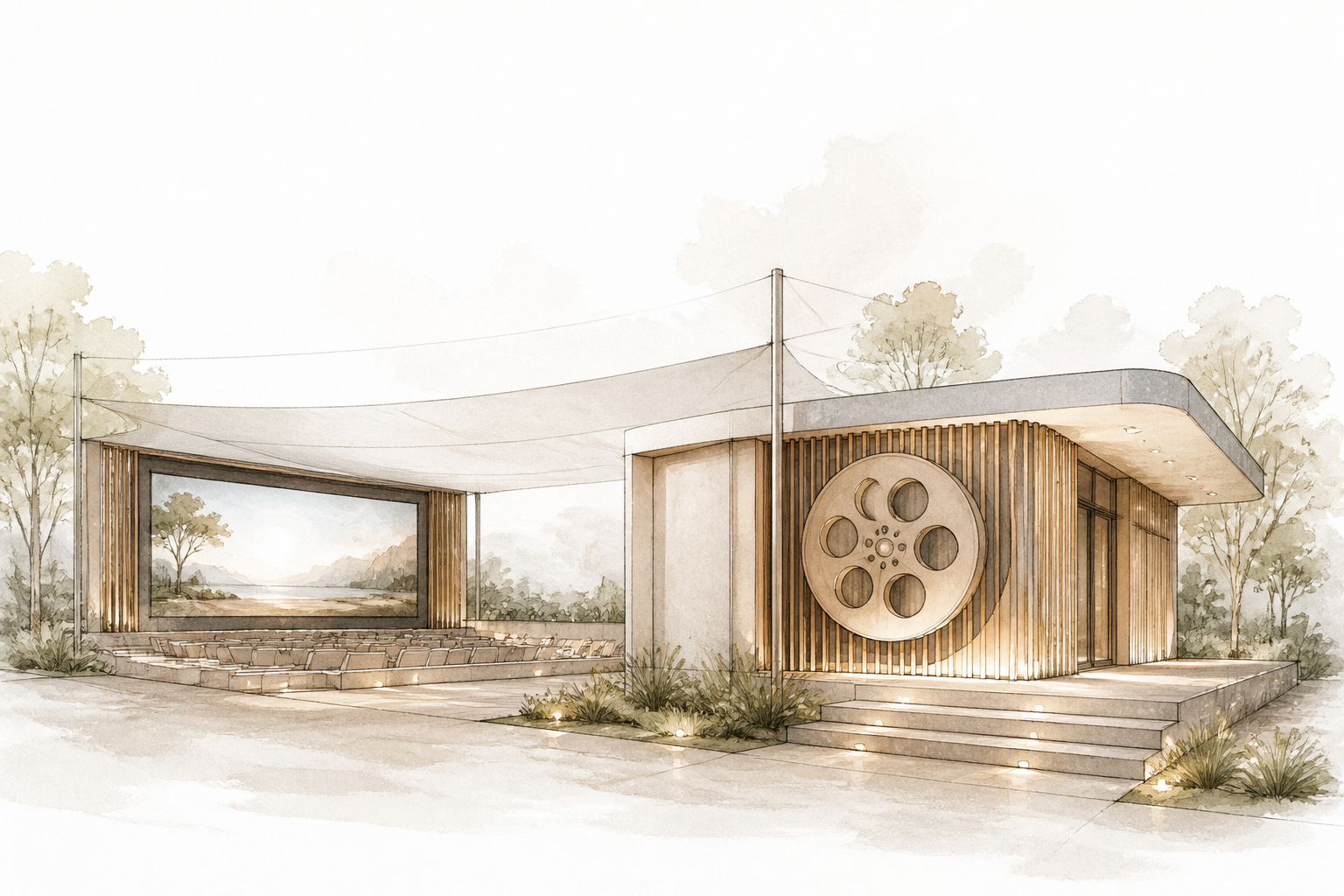
The model captures the core economics of an open-air drive-in cinema, where customers pay per vehicle or per person and watch from the comfort of their cars. It handles dual ticket pricing, nightly double-feature schedules, and a fully seasonal operating calendar. Revenue streams are split into ticket sales, food & beverage concessions, and pre‑show advertising, each driven by daily car count and attendee volume.
Weather is the single biggest operational variable, so the model builds in a daily attendance adjustment tied to precipitation and temperature thresholds. Concession sales are modeled on a per‑attendee basis with separate margins for popcorn, drinks, and candy, reflecting the high contribution of F&B to overall profitability. Film licensing costs are linked to box‑office revenue at standard industry rental rates, while fixed costs cover site lease, staffing, and facility maintenance.
Capital expenditure covers land preparation, the screen/projection system, FM transmitter, ticketing booth, kitchen fit‑out, and initial inventory. The investment estimate reflects the typical order of magnitude for a single‑screen drive‑in; actual figures depend on local conditions. The model also accounts for seasonal ramp‑up, off‑season minimal operations, and the working capital needed to bridge the start‑up phase.
Modeling specifics
- Daily attendance engine that adjusts base attendance by movie popularity, day of week, and a weather multiplier – temperature and rain thresholds scale the car count down, preventing over‑optimistic projections.
- Flexible ticket pricing with three modes: per‑car flat, per‑person, and premium upcharge for blockbusters/openings. Supports family bundles and online booking fee logic.
- Concession revenue module built on per‑capita spending, with customizable menu mix (popcorn, nachos, soft drinks, candy) and distinct cost‑of‑goods percentages for each category.
- Screening schedule up to three slots per night, with summer and shoulder‑season calendars. Start/end dates are user‑defined, and the model automatically compresses operations in colder months if open year‑round.
- Capital expenditure register that compares projection‑based vs. LED screen options, including FM broadcaster, screen structure, and site infrastructure, each with its own depreciation life and maintenance reserve.
- Integrated film rental calculation applied to gross box‑office, using a sliding scale or fixed percentage (typical 35–50%) that matches licensed outdoor cinema agreements and protects profit margins.
What's included in the base version
- Dynamic daily screening and attendance model with weather sensitivity
- Three‑stream revenue breakdown: tickets, concessions, and on‑screen advertising
- Full CAPEX schedule for single‑screen outdoor setup (land, screen, projector/LED, FM, site amenities)
- Operating expense model with film rental, staff, utilities, marketing, and maintenance
- Monthly cash flow, profit & loss, and balance sheet over a 5‑year forecast
- Standard financing structure with equity, senior debt drawdowns, and interest during construction
- Project dashboard with key metrics (NPV, IRR, payback) and one‑way sensitivity tables
Common modeling mistakes
- Assuming year‑round full occupancy without seasonal closure – overstates annual revenue by 20–35% in temperate climates.
- Using fixed attendance per screening and ignoring daily weather impact – inflates total car‑count by 15–25% and masks cash flow variability.
- Leaving concession revenue as a fixed add‑on to tickets instead of modeling per‑attendee spending – loses the high‑margin F&B uplift and understates EBITDA by 10–20%.
- Applying a generic flat film expense rather than a percentage of box‑office (typically 35–50%) – distorts gross margin and can make low‑performing months appear profitable.