Essential Oil Crop Plantation Financial Model
Description
Financial model tailor-made for an essential oil crop plantation — from field establishment to bottled oil revenue. It captures the full lifecycle of perennial aromatic crops (lavender, peppermint, clary sage, tea tree, etc.), with distinct immature, mature, and declining phases over a 10–20-year horizon. The model handles staggered planting, replanting schedules, and intercropping logic if relevant.
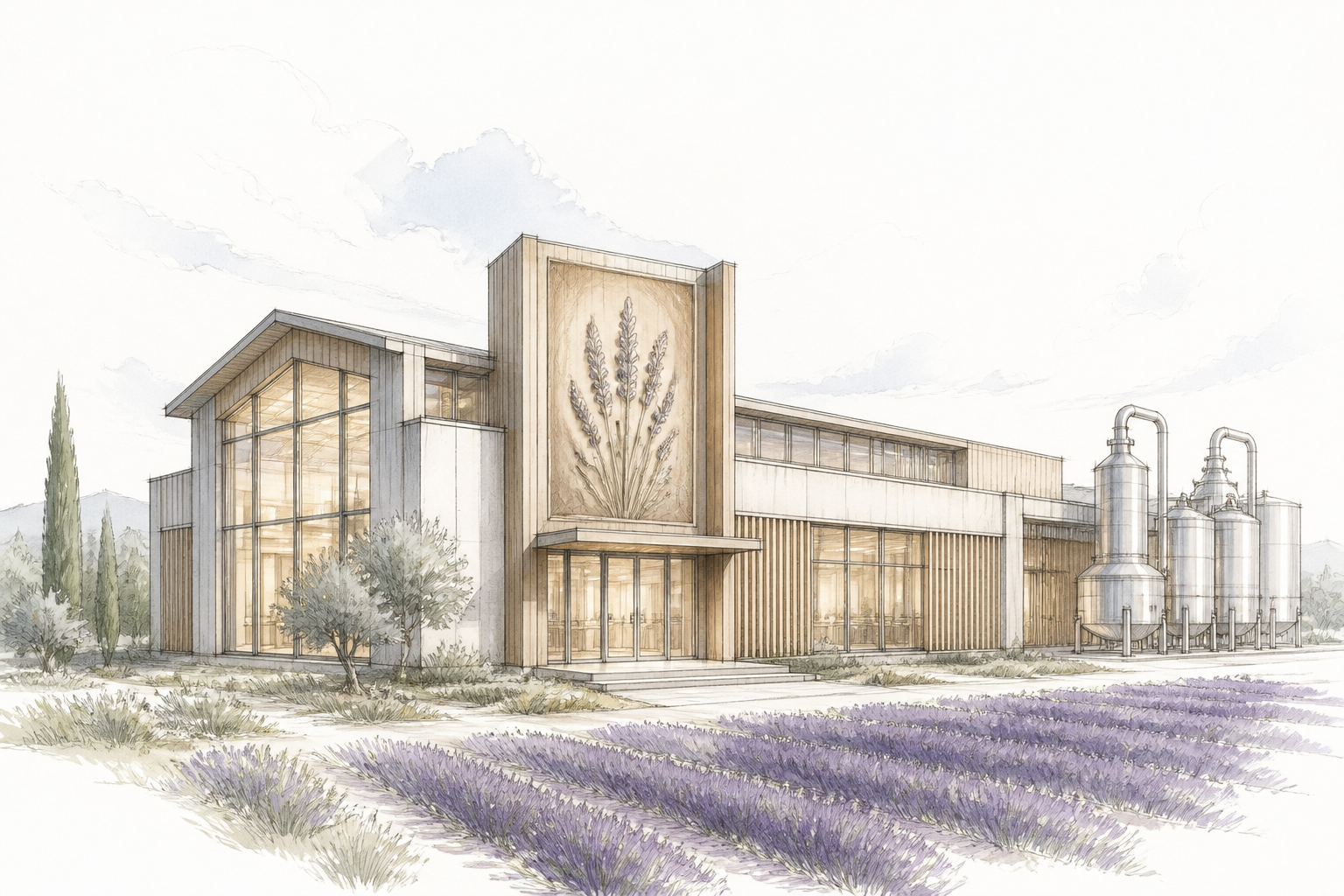
The core of the model is the seasonal harvest and on-farm distillation. You set distillation capacity, batch time, and oil yield per tonne of fresh biomass. It automatically allocates harvested volumes to available stills across the narrow harvest window, modeling throughput constraints and spoilage risk when biomass is not processed within the optimal post-harvest window.
Revenue streams go beyond pure essential oils. The model includes by-products: hydrolats (floral waters), dried distillation straw for biofuel or animal bedding, and residual biomass for composting. You can toggle organic certification premiums, forward contracts, and spot market sales. The financial logic reflects the industry’s long cash conversion cycle and amplified working capital needs during the growing season.
Investment sizing covers land preparation, planting material (clonal or seed), drip irrigation, distillation equipment, storage tanks, and post-harvest handling. Operating expenses are driven by physical units — labor, fuel/energy for distillation, seasonal labor, agrochemicals, and certification costs. The model produces bank-ready financial statements and key metrics tailored to agri-lenders.
Modeling specifics
- Age-dependent yield curves for each crop: yield ramps up from immature years to peak maturity then gradually declines; replanting triggers automatically based on age or yield threshold.
- Distillation capacity scheduling: weekly biomass inflow vs still throughput with a queuing logic. Unprocessed biomass after the harvest window is marked as spoilage, directly reducing yield.
- Multi-oil split from a single biomass batch: a crop can produce a primary oil fraction, a secondary fraction, and hydrolat, each with its own yield and price — model allocates revenue accordingly.
- Seasonal working capital peaks driven by planting and harvest cycles: the model finances intense cash outflows with short-term credit lines or seasonal loans, avoiding permanent debt overestimation.
- By-product revenue and cost allocation: hydrolat and straw revenues have their own direct processing costs and packaging, not a flat percentage of main oil sales.
- Integrated contract farming and outgrower schemes (excluding advanced terms) in the base logic: the model can set a share of raw material sourced from contracted farmers at predefined purchase prices.
- Weather and yield shock sensitivity: a single slider reduces seasonal yield by a chosen percentage, automatically flowing through all production, revenue, and cash flow modules.
What's included in the base version
- Crop establishment and replanting schedule with age-based yield curves
- Harvest calendar, biomass delivery, and on-farm distillation capacity model
- Multi-product revenue module: primary/secondary oils, hydrolat, dried straw
- CapEx schedule: land preparation, irrigation, distillation units, storage, buildings
- Operating expenses by cost driver: seasonal labor, fuel/energy, agrochemicals, maintenance
- Working capital financing (seasonal credit lines, inventory and payables/receivables)
- Debt and equity financing module with principal and interest repayment schedules
- Full financial statements: P&L, Cash Flow, Balance Sheet, plus DSCR and equity IRR dashboards
- Pre-built sensitivity tables on key operational drivers (yield, oil price, distillation efficiency)
Common modeling mistakes
- Assuming full mature yield from year one — overstates oil production by 30–60% during the immature phase and shortens projected payback by 2–3 years.
- Modeling distillation as a fixed annual cost without capacity constraints — underestimates capital needs by up to 40% and overestimates EBITDA margin.
- Ignoring biomass spoilage when harvest peaks exceed still throughput — overstates annual oil output by 15–25% and understates total production costs.
- Spreading harvest evenly over the year instead of a 3–6 week peak window — distorts monthly cash flow and seasonal working capital requirements by a factor of 2–3x.
- Treating by-product revenues as a fixed percentage of oil sales — misestimates total revenue by 10–20% because hydrolat and straw volumes vary independently with crop type and distillation parameters.