Farm Biogas Plant Financial Model
Description
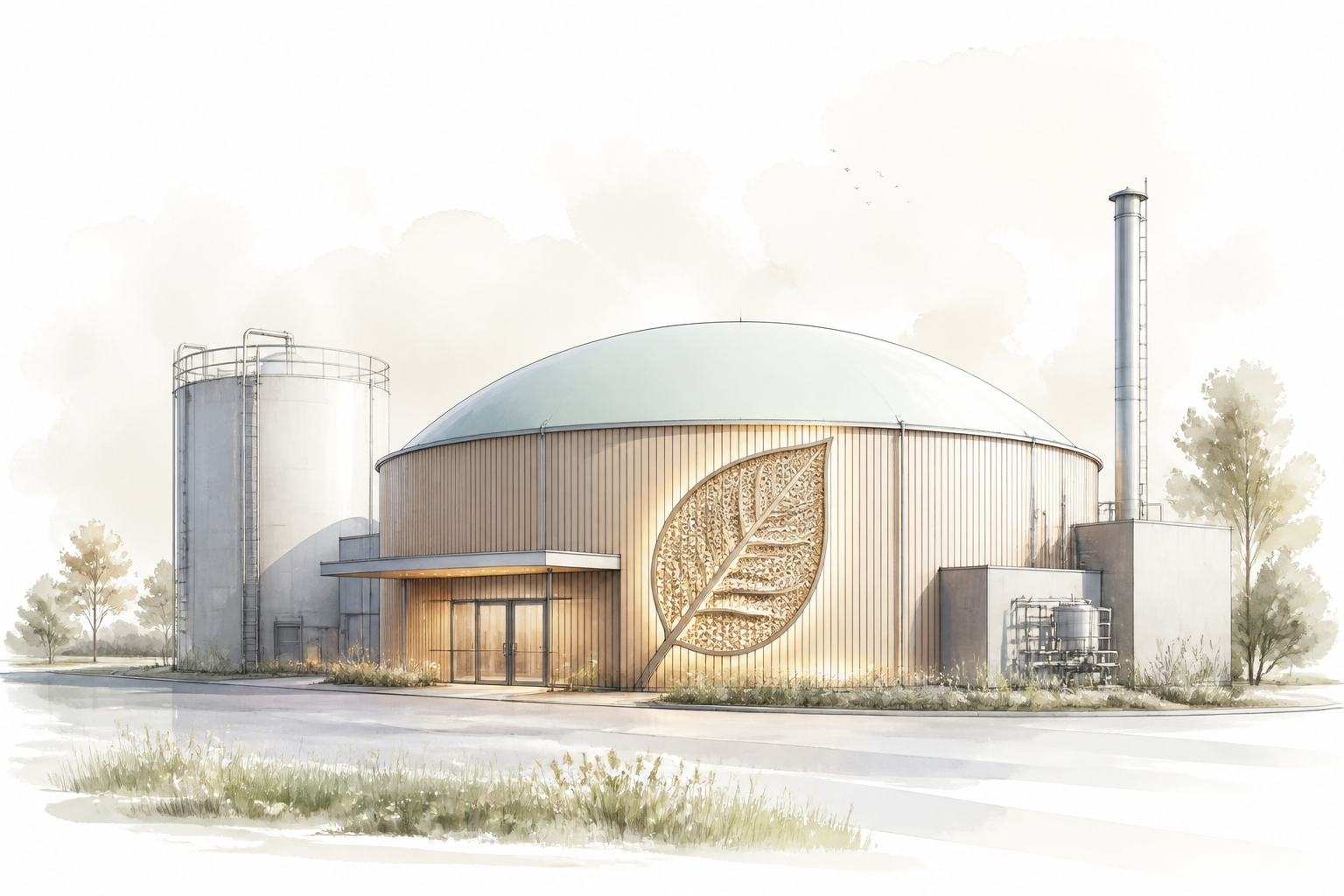
A farm biogas plant captures and monetizes agricultural residues—manure, silage, crop waste—through anaerobic digestion. The project can generate electricity and heat via a CHP unit, upgrade biogas to biomethane for grid injection, or both. This model mirrors real-life configurations starting from a single on-farm digester up to centralized plants co-digesting multiple feedstocks.
Revenue streams typically combine a feed-in tariff or power purchase agreement for electricity, possible heat sales, sales of treated digestate as bio-fertilizer, and in some cases gate fees for accepting external organic waste. Capital costs cover civil works, digesters, gas storage, CHP or upgrading unit, and grid connection. Total investment ranges widely—from below $2 million for simple systems to over $10 million for plants with biomethane upgrading. This model demonstrates the order of magnitude, not a final quote.
Financing often involves senior debt, government grants, and subsidized loan programs specific to renewable energy. The model captures phased construction, interest during construction, and long-term operational dynamics including feedstock seasonality, CHP maintenance reserves, tariff degression, and digestate management. It provides a granular, bottom-up structure so that investors and operators can test every operational and financial lever.
By stress-testing inputs like substrate cost, biogas yield, parasitic load, and equipment availability, the user can see how a real plant behaves through its 20-year life. The flexibility to switch between electricity-only, CHP, or biomethane modes makes it relevant for a broad range of agricultural biogas projects.
Modeling specifics
- Multi-substrate feedstock blending: model accepts up to five distinct substrates with individual methane potentials, dry matter content, seasonal availability curves, and procurement costs. Blending ratios adapt monthly to maintain digester stability.
- CHP performance curves linked to biogas quality and engine load: electrical and thermal efficiency are not constants but respond to methane content and operating load, affecting net output and revenue.
- Biogas storage buffer and gas yield simulation: hourly and daily yield variability is smoothed through gas holder sizing, which influences CHP runtime and fuel self-consumption.
- Parasitic load and heat self-consumption: the digester’s heating demand is calculated from ambient temperature, substrate temperature, and tank insulation. This heat drawn from the CHP directly reduces heat available for sale.
- Maintenance reserve with major overhaul scheduling: the model reserves cash for routine service and periodic engine overhauls (e.g., every 60,000 running hours) as a percentage of replacement cost, avoiding cash flow shocks.
- Feed-in tariff degression and alternative revenue: supports step-down tariffs over time, sliding-scale premiums, or wholesale market price + premium, plus digestate sales and potential gate fees.
- Construction phase drawdowns and interest during construction: debt is drawn in tranches aligned with EPC milestones, and capitalized interest is explicitly calculated before project COD.
What's included in the base version
- Feedstock procurement and cost model (own substrates, storage, transport)
- Anaerobic digestion and biogas yield simulation with gas storage
- Single CHP unit with internal heat balancing (electricity + digester heat)
- CAPEX phasing and construction timeline
- Detailed OPEX: feedstock, labor, utilities, insurance, compliance
- Debt and equity financing with senior loan, repayment, and covenants
- Statutory tax, depreciation, and renewable energy levies
- Integrated financial statements: P&L, cash flow, balance sheet
- Core KPIs: DSCR, LLCR, equity IRR, payback, NPV
- Feed-in tariff or power price scenario with basic degression
Common modeling mistakes
- Ignoring parasitic load and heat demand for the digester and buildings — overstates net electricity available for sale by 15–25%, making project look unrealistically profitable.
- Assuming a constant year-round feedstock composition without accounting for silage seasonality and storage losses — biogas yield can drop 20–30% in winter, delaying debt service in those months.
- Neglecting CHP engine maintenance reserve and major overhaul costs — leads to a sudden cash shortfall every 5–7 years; overhaul cost is typically 20–25% of the initial CHP capex.
- Applying a flat feed-in tariff over 20 years without degression steps — overstates long-term revenue by 5–10%, especially when policy links tariffs to technology maturity.
- Forgetting grid connection reinforcement and transformer capacity costs — can add unplanned capex equal to 10–15% of initial budget, delaying commissioning and forcing additional equity.
- Excluding digestate storage and disposal costs — assumes it is always a revenue stream, while in reality off-season storage and spreading can consume a substantial share of operating income.