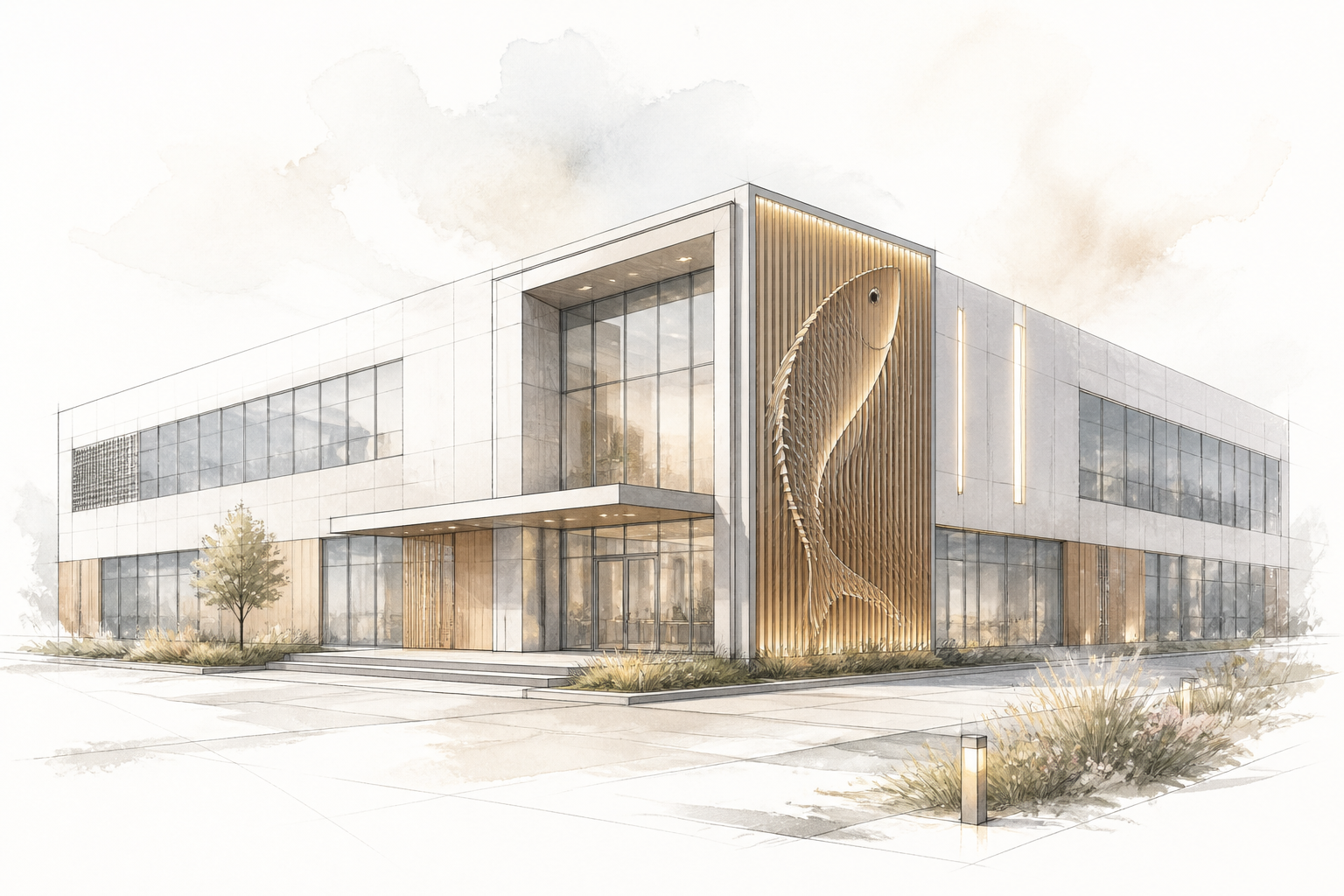
Fish Snack and Ready-to-eat Fish Plant Financial Model
Description
A comprehensive financial model built specifically for an industrial fish processing facility producing shelf-stable snacks, chilled ready-to-eat meals, and value-added fish products. The model captures the full operational cycle from reception of fresh and frozen raw fish through filleting, marination, cooking, smoking, freezing, and packaging across multiple production lines. It is designed for entrepreneurs and managers who need to evaluate a greenfield plant, modernize an existing facility, or structure bank financing with a realistic, operations-driven forecast.
The investment logic covers the entire CAPEX programme: specialized processing equipment (smoking chambers, fryers, vacuum packers, IQF freezers), cold storage construction, water treatment plants, and auxiliary infrastructure such as steam boilers and back-up generators. The model accommodates the phased launch of different product categories—e.g., starting with cold-smoked fish snacks, then adding ready-to-eat fish fillets and seafood salads—and correctly reflects the interplay between capacity build-up, working capital accumulation, and revenue ramp-up.
Particular attention is paid to the unique supply-side dynamics of the fish industry. Raw fish prices and catch volumes follow a pronounced seasonal pattern, often with a single peak season when the entire annual stock is procured. The model includes a monthly procurement and inventory management module that automatically builds up frozen stock during the catch season and draws it down during off-season months, with carrying costs, chilling energy, and storage losses (drip loss, freezer burn) fully accounted for.
On the demand side, the model supports multi-channel sales: retail chains, HoReCa, export, and private label. Each product SKU is linked to its own recipe (bill of materials) with yield factors that differ substantially depending on the technology—cold smoking yields 55–65% of the dressed fish weight, while marinated ready meals may yield 80–85% after soaking. Packaging consumables (MAP trays, stand-up pouches, cartons) are modelled on a per-SKU basis, and logistics costs are split into cold chain distribution and dry ambient shipping.
Regulatory and compliance costs specific to food processing are embedded as separate cost centers: HACCP monitoring, full-time quality assurance staff, laboratory testing, sanitary washing of equipment, pest control, and effluent treatment. These line items are often omitted in generic templates but represent 4–8% of operating expenses and directly impact the achievable margin profile. The model helps the user evaluate whether the target product mix can absorb these fixed compliance overheads.
The financial outputs—three-statement model, detailed cash flow, KPIs (IRR, NPV, debt service coverage ratios), and scenario manager—allow the user to compare conservative, base, and optimistic assumptions. Sensitivity tables highlight the drivers that matter most: raw fish price volatility, cold storage energy tariffs, and the achievable utilization rate during the off-season. The model is structured to be audit-friendly, with all assumptions isolated on dedicated input sheets and no hard-coded numbers in the calculation core.
Modeling specifics
- Seasonal raw material procurement and frozen stock management: the model simulates a short harvest season during which the plant must purchase and freeze the entire year's requirement, with monthly inventory tracking, freezer capacity constraints, and carrying costs reflected in working capital.
- Multi-SKU recipe-based costing with distinct raw fish species (salmon, trout, herring, pollock) and alternative raw material grades (frozen-at-sea, block-frozen, chilled) that affect purchase price, yield, and end-product shelf life.
- Dynamic cold storage energy model tied to stock volume, ambient temperature, and electricity tariffs, rather than a flat percentage of revenue.
- Production line changeover and cleaning downtime coefficients that reduce effective capacity when switching between product groups (e.g., from smoked to marinated products), preventing overestimation of throughput.
- HACCP and sanitation Opex block separated into fixed (certification, laboratory contracts) and variable (sanitary chemicals, PPE per shift) components, with step-costs triggered by the addition of new production lines.
- Product-specific shelf-life modelling that drives finished goods inventory caps, discounting/stock write-off rules, and impacts cash conversion cycle—critical for chilled ready-to-eat items with 5–15 days of shelf life.
- Coproduct and waste valorization module: fish trimmings, skin, and bones can be sold to fishmeal/rendering plants or processed on-site, with their own mini P&L and incremental CAPEX option.
- Phased CAPEX and staggered market entry: the user can define up to three launch phases, each with its own equipment procurement, commissioning delay, and crew recruitment ramp, giving a realistic cash burn profile during construction and commissioning.
What's included in the base version
- Input dashboard with macro assumptions, seasonality profiles, and product mix definition
- Capital expenditure sheet with equipment list, installation, building, and soft costs, linked to depreciation schedule
- Multi-SKU revenue build-up by channel (retail, HoReCa, export, private label) with price-volume tables
- Bill of materials and recipe calculator with yield factors by product category
- Raw material procurement and frozen inventory management module (monthly granularity)
- Direct labor and production staffing plan, including shift patterns and overtime
- Manufacturing overhead: cold storage energy, utilities, maintenance, cleaning, laboratory, and waste treatment
- SG&A and distribution costs: cold chain logistics, sales commissions, marketing, and administrative overhead
- Three financial statements (P&L, balance sheet, cash flow) on a monthly basis
- Financing structure with senior debt, shareholder loans, and working capital facilities
- Standard investment metrics (IRR, equity IRR, NPV, payback, DSCR) with sensitivity tables
- Break-even analysis by volume and by product category
Common modeling mistakes
- Using an annual average raw fish price instead of a seasonal procurement spike — understates peak working capital requirement by 40–60% and distorts the cash flow profile.
- Ignoring the yield difference between fresh, frozen-at-sea, and block-frozen raw materials — leads to gross margin error of 6–10 percentage points depending on product mix.
- Modelling cold storage cost as a constant percentage of revenue — underestimates energy costs in high-stock post-harvest months by 15–25%.
- Applying a single overall utilization rate to all product lines without accounting for changeover and sanitation downtime — overstates annual production volume by 8–15%.
- Omitting finished goods write-offs for short-shelf-life ready-to-eat products — inflates net revenue by 3–7% and masks the real cost of overproduction.
- Underestimating the step-change in HACCP and quality staffing when a second or third processing line is activated — creates a hidden Opex gap of 2–4% of revenue at scale.