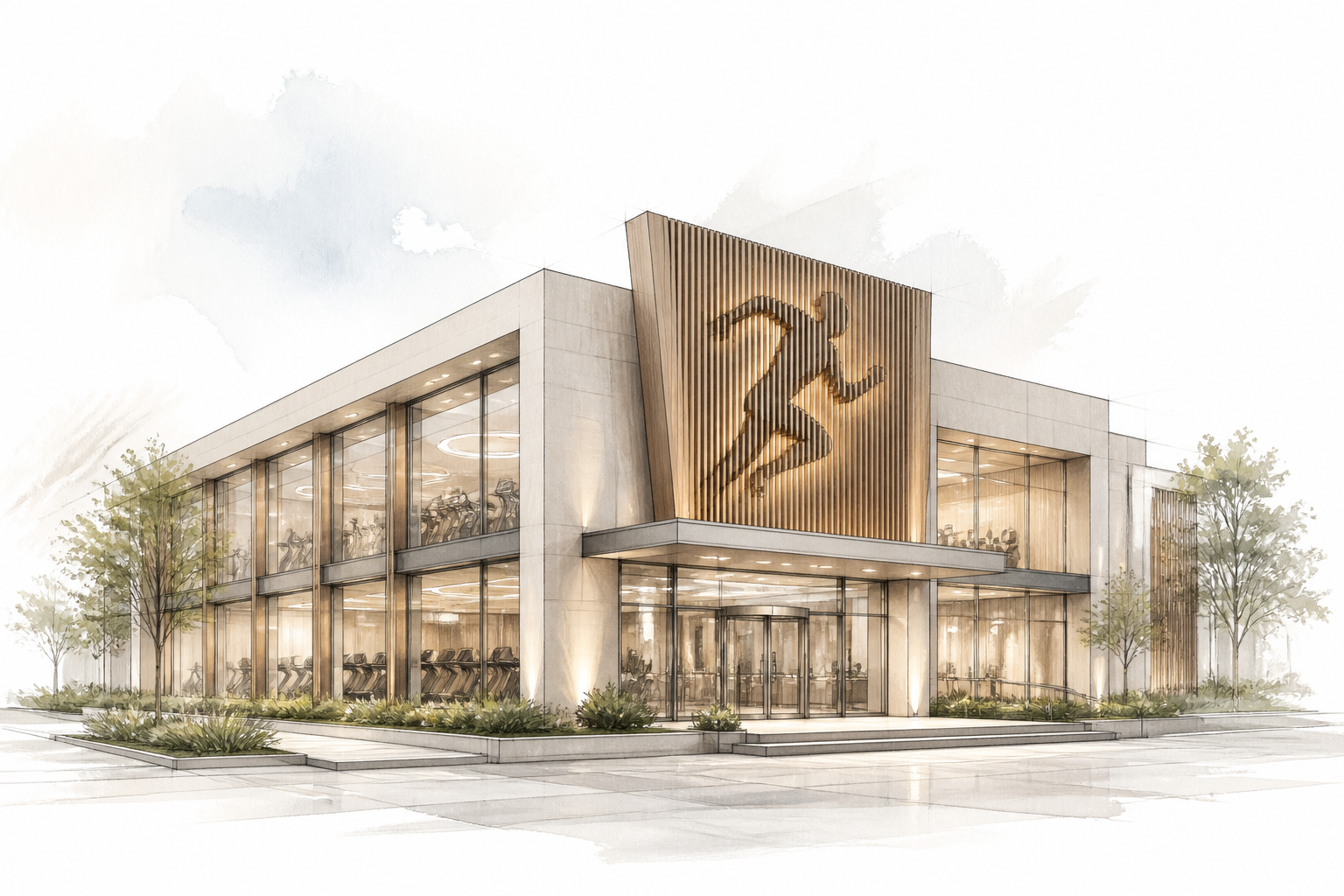
Fitness Club with Swimming Pool Financial Model
Description
The model replicates a full-scale fitness club with an indoor swimming pool, covering multiple revenue streams: recurring memberships (monthly and annual), day passes, personal training, group classes, pool-only access, and ancillary services like café and sports merchandise. It distinguishes between peak/off-peak pricing and corporate vs. individual memberships to reflect real-world demand segmentation.
Capital expenditure modeling covers the pool hall construction—including tiling, filtration, heating, dehumidification, and ventilation systems—as distinct assets with differing depreciation periods and maintenance profiles. Operational expenditures include lifeguard staffing, water treatment chemicals, energy consumption (with heat recovery options), and regular equipment replacement cycles.
The model incorporates member lifecycle dynamics: acquisition through marketing channels, seasonality in attendance, and churn curves by membership type. Capacity constraints on pool lanes and gym floor are linked to revenue recognition, preventing overbooking and ensuring realistic utilization levels. The investment outlay is shown by order of magnitude (disclaimer applies).
Modeling specifics
- Pool construction costs are broken into shell, filtration, heating, and dehumidification as separate fixed assets, each with its own depreciation period and replacement reserve, capturing the high maintenance complexity.
- Water and energy consumption are forecast using occupancy-driven usage rates and seasonal temperature profiles, directly impacting heating and chemical costs – a feature absent in generic templates.
- Staffing model for lifeguards uses mandatory coverage ratios (e.g., lifeguards per square meter of water surface) and shift-based scheduling, adjusting automatically with pool operating hours.
- Member lifecycle is built with acquisition channels (organic, referral, paid ads), churn curves per membership type, and seasonal freeze options, allowing realistic long-term retention modeling.
- Revenue from pre-paid annual memberships is deferred and recognized monthly, preventing artificial cash flow spikes, while monthly memberships follow simple accrual.
- Auxiliary income streams (personal training, group classes, café) are linked to attendance rates, ensuring they scale realistically with member activity levels.
- Separate capacity limits for pool lanes, group class studios, and gym floor are enforced to prevent revenue overbooking and align with operational reality.
- An optional heat recovery module demonstrates the financial impact of energy-saving technology, typically cutting pool heating costs by 20–30%.
What's included in the base version
- Multi-stream revenue model with configurable membership types (individual, family, corporate, pool-only) and user-defined pricing tiers.
- Capex plan with asset-level tracking for pool infrastructure (shell, filtration, HVAC-D), gym equipment, and interior finishes.
- Operating expenditure model including lifeguard staffing, water treatment, energy (electricity, gas), maintenance, and marketing.
- Debt and equity financing module with flexible drawdown schedules and cash sweep/repayment.
- Integrated financial statements (monthly P&L, cash flow, balance sheet) over 10-year projection.
- Scenario manager with toggles for membership growth, pricing changes, and seasonality intensity.
- Dashboard with key metrics: membership count, ARPU, occupancy rate, EBITDA margin, cash flow.
Common modeling mistakes
- Treating all membership revenue as immediate cash without deferring annual prepayments – inflates early-period cash and underestimates future revenue, distorting liquidity ratios.
- Using a fixed monthly utility cost instead of occupancy- and weather-linked energy models – overstates pool heating cost in mild months and understates by 15–25% in winter.
- Not including mandatory lifeguard staffing ratios and shift rules – payroll expense underestimated by 20–30%, and model fails compliance checks.
- Modeling constant membership retention without churn curves – overstates long-term member base and gross revenue by 25–35% after 5 years.