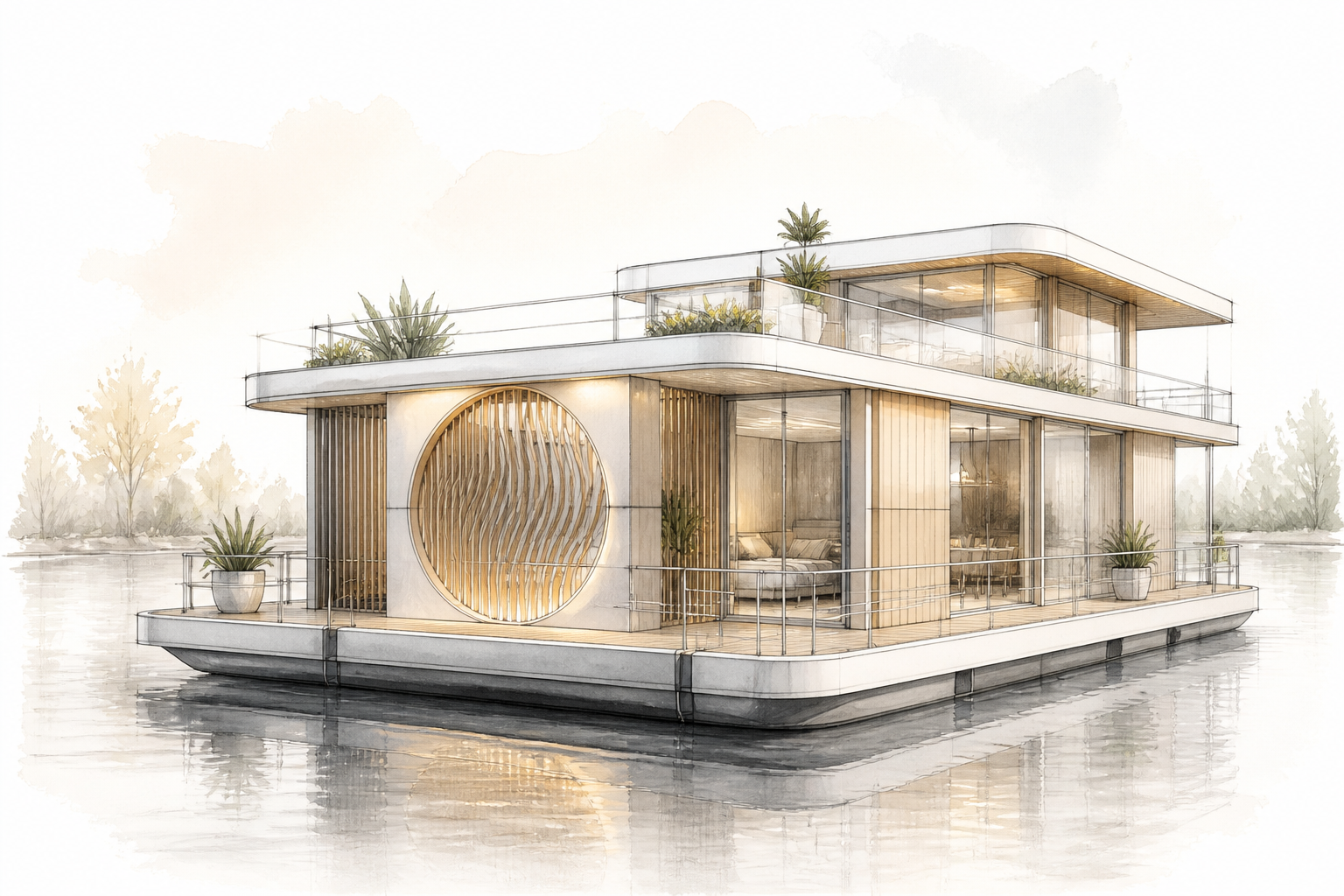
Floating Botel Financial Model
Description
This model is built for a floating hotel (botel) – a vessel converted or purpose‑built to operate as a hotel on water. It captures the dual nature of the asset: a hotel business with room occupancy, F&B, and event spaces, overlaid with a maritime operation subject to navigation seasons, port regulations, and vessel maintenance schedules. The investment typically runs into the mid‑seven‑figure range, and the model provides a robust framework to assess viability rather than a definitive price tag.
The tool addresses the key revenue and cost drivers unique to botels. Revenue is modeled by cabin category, seasonally adjusted occupancy, and day‑part dynamic pricing, alongside restaurant, bar, conference, and excursion income. On the cost side, it separates hotel staff from maritime‑certified crew, accounts for high insurance premiums (hull, P&I), variable mooring and port access fees, and the substantial fuel costs for both repositioning and onboard power generation. The model also builds in a mandatory dry‑dock reserve every 3–5 years, which is often underestimated.
Beyond operations, the model handles the full financial cycle: phased CapEx for acquisition/construction, residual value at end‑of‑life, long‑term depreciation (20–25 years), debt financing with covenants, and detailed cash flow management that covers off‑season preservation costs. It includes sensitivity analysis on the most volatile parameters – occupancy, ADR, fuel price, and seasonal length – giving an investor a realistic picture of risk and return.
Modeling specifics
- Dual‑mode operation logic that splits the year into a navigable high season and a low/off‑season, with separate cost drivers (crew overtime, fuel, port dues) and revenue patterns for each.
- Seasonal occupancy engine that ramps up over several years, models shoulder months with lower rates, and applies cabin‑category dynamics (standard, superior, suites) rather than a flat ADR.
- Mandatory dry‑dock reserve cycle that forces a schedule every 3–5 years, breaks down direct costs (dock fees, hull treatment, mechanical overhauls) and builds a cash accumulation fund from operating cash flow.
- Crew structure that distinguishes maritime‑certified positions (captain, chief engineer, mates) from hotel staff, automatically applies minimum manning requirements, and adjusts wages during laying‑up periods.
- Onboard utilities module that calculates fuel consumption for generators and propulsion based on operating hours, guest count, and route distance, with sensitivity to fuel‑price changes and shore‑power connection options.
- Multi‑revenue center blueprint covering accommodation, F&B (à la carte, banqueting), rentals (event spaces, spa), excursions, and ancillary services – each with its own margin and cost‑of‑sales profile.
- Vessel depreciation over an extended useful life with residual value tracking, linked to scrap‑metal indices or second‑hand market estimates, and aligned with maritime asset accounting practices.
- Mooring and port contract management that allows multiple berth locations, choice between annual and seasonal contracts, and automatic escalation clauses tied to inflation or fixed steps.
What's included in the base version
- Integrated monthly three‑statement model (P&L, Balance Sheet, Cash Flow) with a 15‑year horizon
- Revenue block with cabin category split, F&B, events, excursions, and ancillary revenue, all driven by occupancy and seasonality
- Comprehensive OpEx structure: crew payroll (maritime and hotel), fuel, mooring, maintenance, insurance, marketing, and G&A
- CapEx schedule covering vessel acquisition/construction, conversion/renovation, hotel equipment, and pre‑opening expenses
- Financing module with senior debt, equity injections, drawdown schedule, and loan covenants (DSCR, LLCR)
- Depreciation schedule per asset class (hull, machinery, interiors), deferred tax, and tax calculations
- Key performance dashboard: RevPAR, occupancy, ADR, EBITDA margin, DSCR, and cash‑to‑debt ratios
- Sensitivity tables for occupancy, ADR, fuel price, seasonal length, and dry‑dock cycle impact on IRR and payback
Common modeling mistakes
- Assuming year‑round full occupancy without seasonality – inflates annual revenue by 35–50% and hides cash shortfalls during off‑season months.
- Omitting the dry‑dock reserve – ignoring the 3‑ to 5‑yearly hull overhaul costs leads to OpEx being understated by 10–15% and sudden liquidity gaps.
- Modeling all crew as hotel staff – failing to account for mandatory, higher‑wage maritime‑certified officers distorts labor cost upwards and misses statutory compliance costs.
- Fixing fuel cost as a constant monthly amount – fuel consumption varies with repositioning, generator load, and passenger numbers, resulting in a margin error of up to ±15%.
- Neglecting off‑season mooring/preservation expenses – assuming the vessel sits idle with no security, maintenance, and insurance pushes winter cash‑flow forecasts 20–30% too optimistic.
- Underinsuring the asset – using standard hotel liability rates in place of hull & machinery and P&I insurance can underestimate the total insurance line by a factor of 2–3.