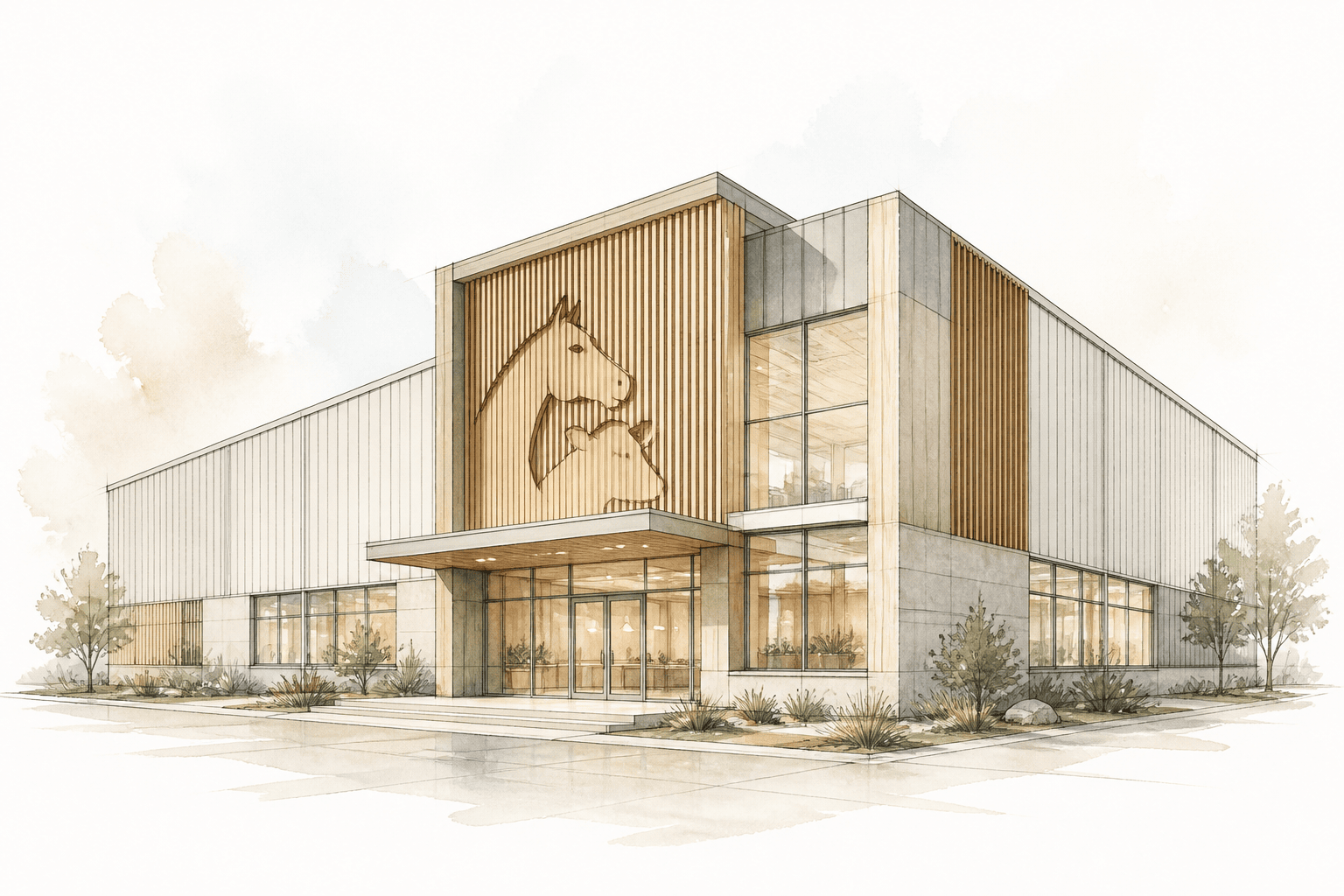
Horse and Breeding Livestock Feed Plant Financial Model
Description
This financial model is built for a dedicated feed manufacturing facility producing specialized rations for horses and high-value breeding livestock. Unlike general livestock feed mills, the plant focuses on premium formulations for broodmares, stallions, performance horses, and pedigree breeding cattle and sheep, where nutritional precision and brand consistency are critical. The model captures the full production cycle from raw ingredient receiving, grinding, and mixing to pelleting, extruding, and packaging, with the flexibility to produce mash, pelleted, and extruded feed products across multiple brands and private labels.
The core of the model is an integrated least-cost formulation engine that balances nutritional constraints, ingredient availability, and cost to generate optimal recipes for each SKU. It models ingredient storage constraints—silo, bin, and flat storage—with separate costing for bulk grains, proteins, vitamin-mineral premixes, and specialty additives such as biotin, omega‑3, and probiotics. The model accounts for shrinkage, moisture loss, and shelf-life limits that are especially important for high-value ingredients.
For breeding livestock customers, the model includes contract grower relationships and toll manufacturing scenarios, where the plant processes customer-owned grains or formulates private-label feeds. Seasonality is modelled at the product level: demand surges before breeding and foaling seasons, during racing and show circuits, and for winter feeding programs, with inventory pre-build capabilities to meet peak demand without overstocking perishable items.
Modeling specifics
- Least-cost formulation with multi-variable constraints (nutrient minima/maxima, ingredient inclusion limits) – recipes dynamically re-optimized as ingredient prices change, not just static bill-of-materials.
- Ingredient inventory with storage-type segregation (silos, bins, flat warehouse) and shelf-life decay – spoilage, moisture adsorption, and vitamin degradation reduce usable stock over time.
- Multi-product batch scheduling with changeover times, purge requirements between medicated and non-medicated lines, and moisture-loss correction after conditioning and pelleting.
- Seasonal demand curves by product group and pre-build logic – inventory is accumulated ahead of breeding, foaling, and show seasons to avoid overloading production during peaks.
- Toll manufacturing module that separates costing for customer-supplied grain, private‑label runs, and co-packing, with dedicated revenue and cost lines.
- Quality-assurance cost modelling – routine mycotoxin tests, FDA/AAFCO sampling, retesting after purge, and compliance buffers built into operating expenses.
What's included in the base version
- Least-cost formulation block with customizable nutrient specifications and ingredient price feeds
- Multi-step production model: receiving, grinding, batching/mixing, conditioning, pelleting/extruding, cooling, packaging
- Raw material inventory with storage-type capacities (silos, bins, warehouse) and shelf-life depreciation
- Finished product inventory with FIFO costing and batch tracking
- Monthly demand builder with seasonality factors by product line and customer segment
- Toll manufacturing and private‑label order entry with separate revenue and raw material handling
- Integrated P&L, cash flow, balance sheet, debt schedule, DCF valuation, and key KPIs (kg produced, utilization, shrink, margin per tonne)
Common modeling mistakes
- Ignoring moisture loss during conditioning, pelleting, and storage – final feed output overstated by 2–5%, distorting raw material requirements and revenue per tonne.
- Using fixed recipes without least-cost optimization – ingredient cost overestimated by 8–15%, and margin analysis becomes meaningless as commodity prices fluctuate.
- Neglecting changeover and purge losses between production runs – effective capacity overstated by 5–10%, leading to oversized equipment and unrealistic utilization targets.
- Failing to model shelf-life constraints on high-value additives (vitamins, probiotics, oils) – spoilage costs understated and inventory carrying cost artificially low, masking cash trapped in expired stock.
- Assuming flat annual demand – peak season bottlenecks and inventory stock-outs are completely missed, resulting in lost sales and delayed deliveries during critical breeding/racing periods.