Industrial Bakery Plant Financial Model
Description
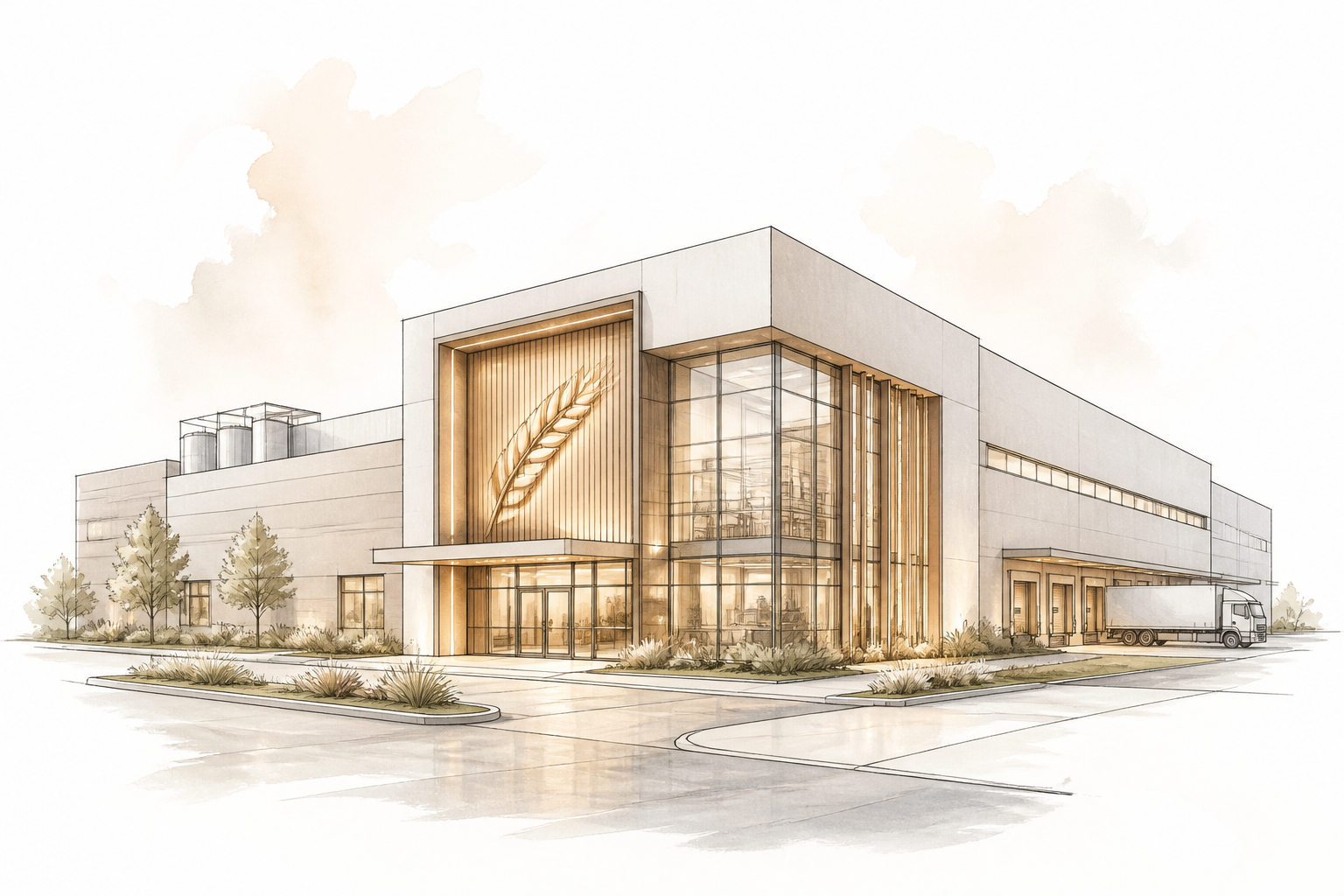
The model covers the full industrial‑scale bakery cycle: from bulk raw‑material intake (flour silos, sugar, yeast, oils) through automatic production lines to packaging and dispatch of fresh, chilled, and frozen goods. It is designed for a high‑output plant serving retail chains, quick‑service restaurants, and wholesale customers, and captures the complex interplay of multiple production cells, shared utilities, and a multi‑channel commercial structure.
Each production line is configured with its own equipment set — mixers, dividers, proofers, tunnel ovens, coolers, and packaging machines — and is driven by detailed recipes (bill‑of‑materials) with cycle times, yields, and changeover losses. The model automatically propagates the impact of product mix changes, semi‑finished goods flow, and cleaning downtime onto overall equipment effectiveness and raw‑material demands.
The capital‑expenditure schedule breaks down land, civil works, high‑capacity energy infrastructure (gas mains, power transformers, water treatment), processing equipment, and support systems (flour silos, CIP, QA lab). Phased commissioning and a realistic start‑up curve allow the user to mirror the gradual ramp from first bake to full capacity without overstating early output.
Operational details include shift‑by‑shift labor by skill category (bakers, machine operators, packers, warehouse), energy consumption linked directly to oven throughput and product thermal load, waste streams and stale‑product returns, as well as a flexible sales‑and‑pricing engine that handles own‑brand, private‑label, and co‑packing channels with tiered rebates and take‑back agreements. The model is stress‑tested for seasonality, commodity‑price swings, and volume volatility, giving a clear view of profit potential and break‑even points.
Modeling specifics
- Multi‑line recipe‑driven production planning with dynamic BOMs (flour, water, yeast, improvers, oils) that automatically calculate raw‑material consumption per line, including losses at each process step (mixing, proofing, baking, cooling).
- Bulk raw‑material inventory management with daily drawdown from silos and intermediate storage, reorder‑point triggers, and quality‑driven FIFO logic that reflects shelf‑life constraints for fresh ingredients.
- Granular energy‑cost model separating base load, electric drive power, and gas/oil for ovens per tonne of baked product, linked to production schedule, oven type, and utilisation — preventing structural underestimation of energy expense.
- Labor planning by shift and skill: line operators, master bakers, QA lab, packing staff, warehouse crew, with role‑based wage rates, overtime rules, and the ability to add seasonal temporary workers.
- Cold‑chain and shelf‑life logistics module that computes distribution cost by temperature regime (ambient, chilled, frozen), own‑fleet vs 3PL, distance bands, and returns handling with spoilage allowances.
- Co‑manufacturing engine that allocates capacity and costs for private‑label goods produced on the same lines, with transfer pricing, without requiring a separate legal‑entity model.
- Depreciation and maintenance‑reserve model for continuous baking ovens and packaging lines that schedules major overhauls after defined operating hours, ensuring capital reserves accumulate ahead of real replacement cycles.
What's included in the base version
- Production schedules and BOMs for up to 10 product families
- Raw‑material inventory and procurement planner
- Capex schedule with equipment list, civil works, and startup expenses
- Personnel plan with shift roster and role‑based salaries
- OPEX model (energy, maintenance, packaging, QA, logistics)
- Sales, pricing, and channel mix (own brand, private label)
- Financing structure (equity, bank debt, leases)
- Integrated three financial statements (monthly, up to 10 years)
- Dashboard with KPIs: gross margin per line, OEE, cash conversion cycle
Common modeling mistakes
- Applying a single plant‑wide overhead rate instead of activity‑based cost allocation per line and SKU — gross margin for high‑volume items is understated by 15–20% while low‑volume premium breads appear artificially profitable.
- Ignoring energy‑consumption peaks during oven pre‑heating, start‑up of proofers, and ambient‑temperature swings — electricity and gas costs are systematically understated by 8–12%.
- Assuming full‑yield output from day one without a commissioning ramp‑up curve — production volume is overstated in the first 6–9 months, pulling forward project payback by 1–2 years.
- Overlooking stale‑product returns and credit notes under take‑back agreements with supermarkets — revenue is overstated by 3–7% and working capital is understated by the un‑reserved refund liability.
- Not provisioning for major oven and freezer overhauls after 8,000–15,000 operating hours — mid‑life free cash flow appears 10–15% higher, masking future capital‑intensive maintenance events.