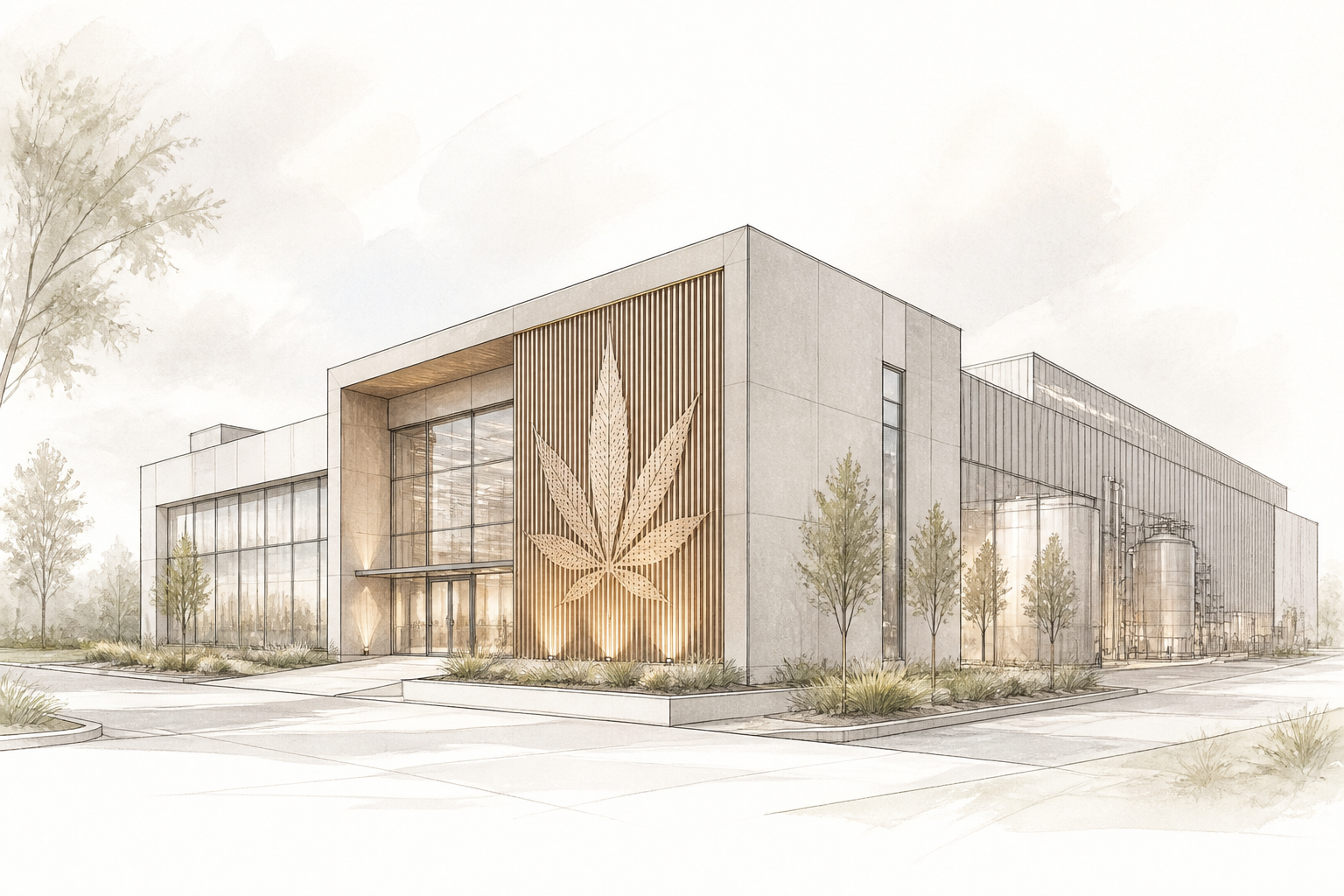
Industrial Hemp Farm Financial Model
Description
A vertically integrated financial model covering the full industrial hemp value chain — from seeding, cultivation, and harvesting of dual-purpose cultivars through primary decortication and secondary extraction or sale of intermediate products. The model reflects real-world agronomic decisions: variety selection, planting density, irrigation strategy, and harvesting window optimization for fiber, grain, and floral biomass.
The revenue structure is built around multi-product allocation — long fiber, hurds, seed/grain, and CBD-rich floral material — each with independently projected prices, yields, and processing losses. A dedicated block handles regulatory compliance, including THC testing costs, probability of mandatory crop destruction if the legal threshold is exceeded, and the financial impact of re-sampling delays.
On the cost side, the model captures seasonal working capital peaks, drying and storage capacity constraints, modular processing equipment (decorticator, extractor), and labor scaling during harvest. It accommodates land lease or purchase, phased CAPEX, and a mix of term debt and revolving credit. Total project investment typically ranges from several million to tens of millions of dollars; every input is parameterized so the model can be tailored to a specific scale without distorting the logic.
Modeling specifics
- Multi-product yield decomposition: separates biomass into stems, hurd, grain, and floral material with distinct processing recovery rates and price vectors, avoiding the typical one-size-fits-all output assumption.
- THC compliance stochastic risk: models probability of crop failure due to lab test exceedance, applying a destruction factor to harvestable tons and dynamically reducing revenue for the affected field.
- Harvest window capacity constraints: limits daily throughput of drying and decortication equipment based on peak harvest inflow, exposing bottlenecks that would otherwise be smoothed out in a typical model.
- Dual-purpose genetics switching: allows the user to shift the output mix (fiber vs. CBD) by changing cultivar parameters, automatically adjusting planting density, harvest timing, and expected cannabinoid profiles.
- By-product valorization: explicitly books revenue from hurd sold for construction/bedding or spent biomass used for bioenergy, correcting the common error of understating total farm income.
- Crop rotation enforcement: land cannot be planted with hemp on consecutive seasons without a break crop; the model tracks field history and applies nitrogen carry-over effects onto yield.
- Batch-level extraction costing: for CBD operations, builds up COGS per batch using solvent/CO2 consumption, energy, labor, and quality testing, replacing a simplistic flat percentage gross margin.
- Season-sensitive working capital: calculates a dynamic credit line draw during pre-planting and growing months, reflecting exact cash needs for inputs, seed, fertilizers, and compliance testing before any harvest revenue arrives.
What's included in the base version
- Land acquisition or lease schedule and fixed asset register for on-farm and processing equipment
- Multi-year crop plan with rotation logic, planting areas, and cultivar database
- Yield estimation engine with inputs for seeding rate, density, irrigation, and climatic factors
- Post-harvest processing yields: decortication outputs (fiber, hurd) and floral biomass for extraction
- Revenue build-up by product: long fiber, hurd, grain/seed, and crude CBD oil, each with own volume and price
- Operating expenses: seed, fertilizers, crop protection, fuel, labor, utilities, drying, testing, and maintenance
- Licensing and annual compliance costs, including THC testing and regulatory fees
- Financing structure: term loan, revolving working capital facility, equity contributions, and interest calculations
- Integrated three financial statements (P&L, cash flow, balance sheet) on a quarterly and annual basis
- Key investment metrics: project IRR, equity IRR, NPV, payback period, and sensitivity tables for yield, price, and THC loss rate
Common modeling mistakes
- Ignoring the THC compliance culling rate — causes overestimation of marketable biomass by 10–20%, leading to inflated gross revenue and distorted operating margins.
- Treating drying capacity as unlimited — leads to a processing bottleneck that reduces actual harvest-to-sale conversion by 15–30%, lengthening the cash conversion cycle and tying up working capital.
- Applying a fixed extraction rate to all floral biomass regardless of cannabinoid content — can overstate CBD output by 20–50% if low-potency stalks and leaves are not separated pre-extraction.
- Overlooking seasonal working capital needs — results in a cash shortfall during planting that forces expensive bridge financing, understating total financing cost by 2–4% of annual OPEX.