Manure-to-granulated Fertilizer Processing Plant Financial Model
Description
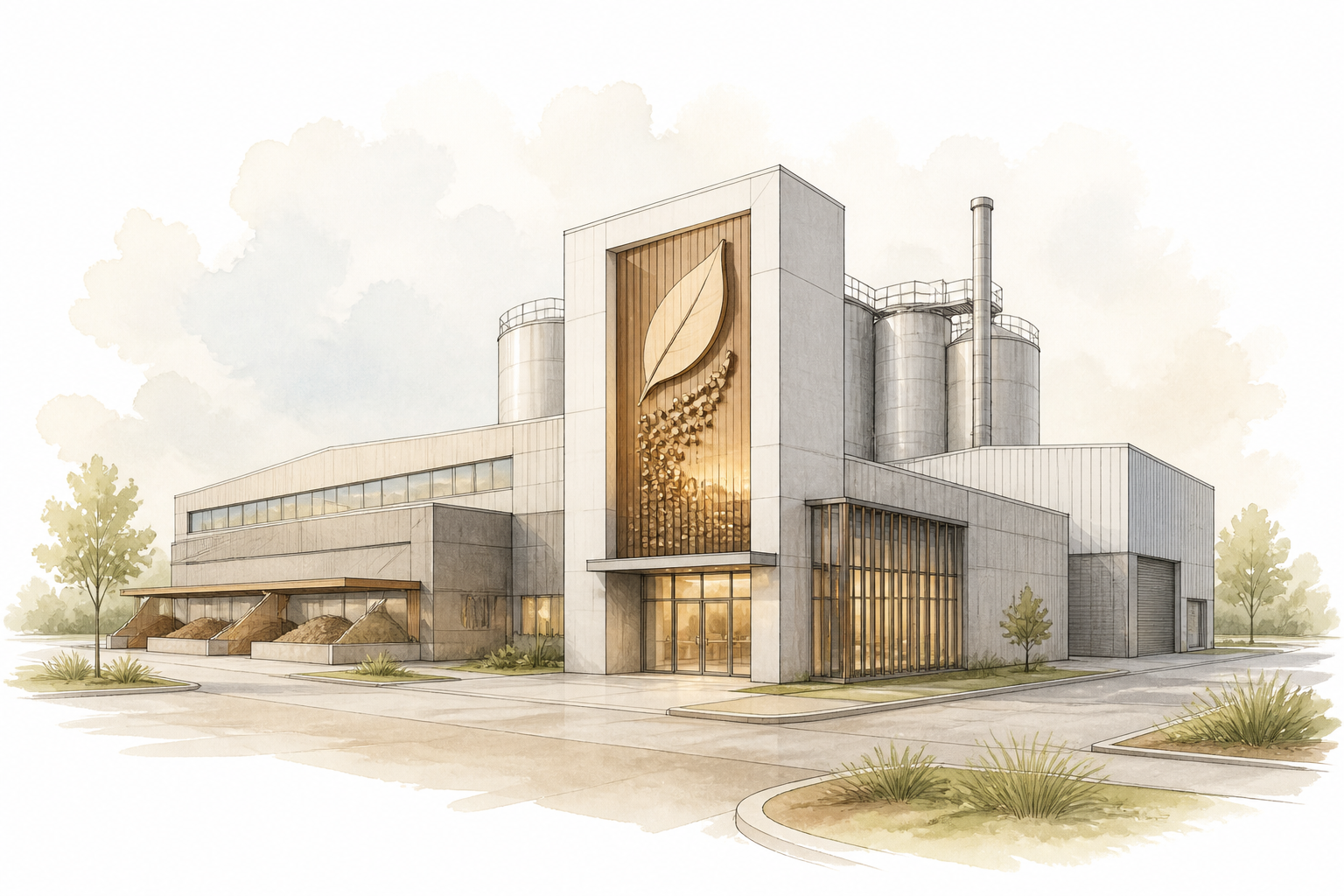
The model represents a complete processing plant that converts raw animal manure (poultry, cattle, swine) into granulated organic fertilizer. It covers receiving, blending, drying, granulation, cooling, screening, coating, and packaging. The logic handles fluctuating moisture and nutrient levels, seasonal feedstock supply, and the interdependencies between energy consumption, throughput, and product quality.
Revenue streams are built around multiple fertilizer grades defined by NPK and organic matter content, with a pricing matrix that reflects nutrient premiums and granule size. The model supports direct B2B agricultural sales, bulk and bagged distribution, and optional export channels. It also allows for revenue from co-products like biogas, electricity, and carbon credits when the relevant sub-models are activated.
Capital expenditure is phased across building, process lines, and utility infrastructure with discrete equipment size steps that mirror real-world procurement. Operating costs dynamically respond to moisture-driven drying energy, labor shifts, consumables, and environmental compliance. The structure captures the long investment phase, working capital requirements for raw material inventory, and the gradual ramp-up to full production capacity.
Modeling specifics
- Multi-feedstock blending engine with variable moisture, NPK, and organic matter – enables margin optimization and product target formulation without manual recalculation.
- Moisture-link energy model for drying – gas and electricity consumption calculated from inlet moisture via mass‑and‑heat balance, preventing opex understatement due to seasonal or feedstock changes.
- Discrete capacity steps for granulation lines – equipment added in fixed throughput increments, avoiding the over‑optimism of continuous scaling and correctly triggering capex for second/third lines.
- Co-product revenue integration (biogas, CHP, biochar) as optional sub‑blocks with their own capex, opex, and offtake contracts, so the plant value includes all potential streams.
- Nutrient-content-based pricing for each SKU – product price indexed to NPK ratios and organic matter certification, with the ability to set premiums for high-analysis grades and penalties for low-quality batches.
- Seasonality-driven feedstock availability and demand calendar – monthly harvest/collection windows for raw manure and seasonal fertilizer buying patterns are built into inventory and cash flow.
- Granule size and packaging mix model – profiles revenue by size class (2–4 mm, 4–6 mm, etc.) and packaging type (bulk, big‑bag, 25‑kg bags), each with distinct selling prices and packing costs.
- Environmental permit and compliance cost scheduler – phased capex/opex for air and water permits, emission monitoring, and reporting, tied to production triggers.
What's included in the base version
- Executive summary dashboard with key outputs and charts
- General assumptions and input drivers sheet (currencies, inflation, escalation, discount rates)
- CAPEX schedule with civil, mechanical, electrical, and utilities breakdown
- Fixed and variable OPEX model (consumables, direct labor, maintenance, G&A, logistics basics)
- Revenue build‑up by product grade, pricing, and sales volume ramp‑up
- Financing module with debt/equity draw schedule, interest, and principal repayment
- Integrated monthly 3‑statement model (P&L, cash flow, balance sheet) over a project horizon of 15–25 years
- Investment metrics (IRR, NPV, payback period, DSCR, LLCR) and break‑even analysis
- Standard sensitivity analysis (tornado chart on key drivers, one‑way and two‑way data tables)
- Tax and depreciation module (corporate tax, VAT/sales tax logic, accelerated depreciation where relevant)
Common modeling mistakes
- Ignoring the relationship between feedstock moisture and drying energy – opex is underestimated by 20–35%, leading to overvalued margins and delayed cash break-even.
- Treating granulation capacity as a continuous variable – plant utilization appears unrealistically high, and the capex for a second line is deferred by 1–3 years, distorting IRR.
- Assuming year-round availability of raw manure without seasonal closures – raw material gap months cause unexpected cash shortfalls and require over‑sized feedstock inventory financing.
- Using a flat average selling price for all products – misprices the mix, overvalues low-grade output, and fails to capture the 10–25% revenue uplift achievable through nutrient-rich grades.
- Neglecting seasonal demand peaks for fertilizer – sales volumes are smoothed, hiding seasonal working capital spikes of 30–50% and making the business look less capital-intensive than it is.
- Leaving out environmental compliance costs after ramp‑up – models show smooth opex while real operations face step‑changes in monitoring, reporting, and permit renewal costs.