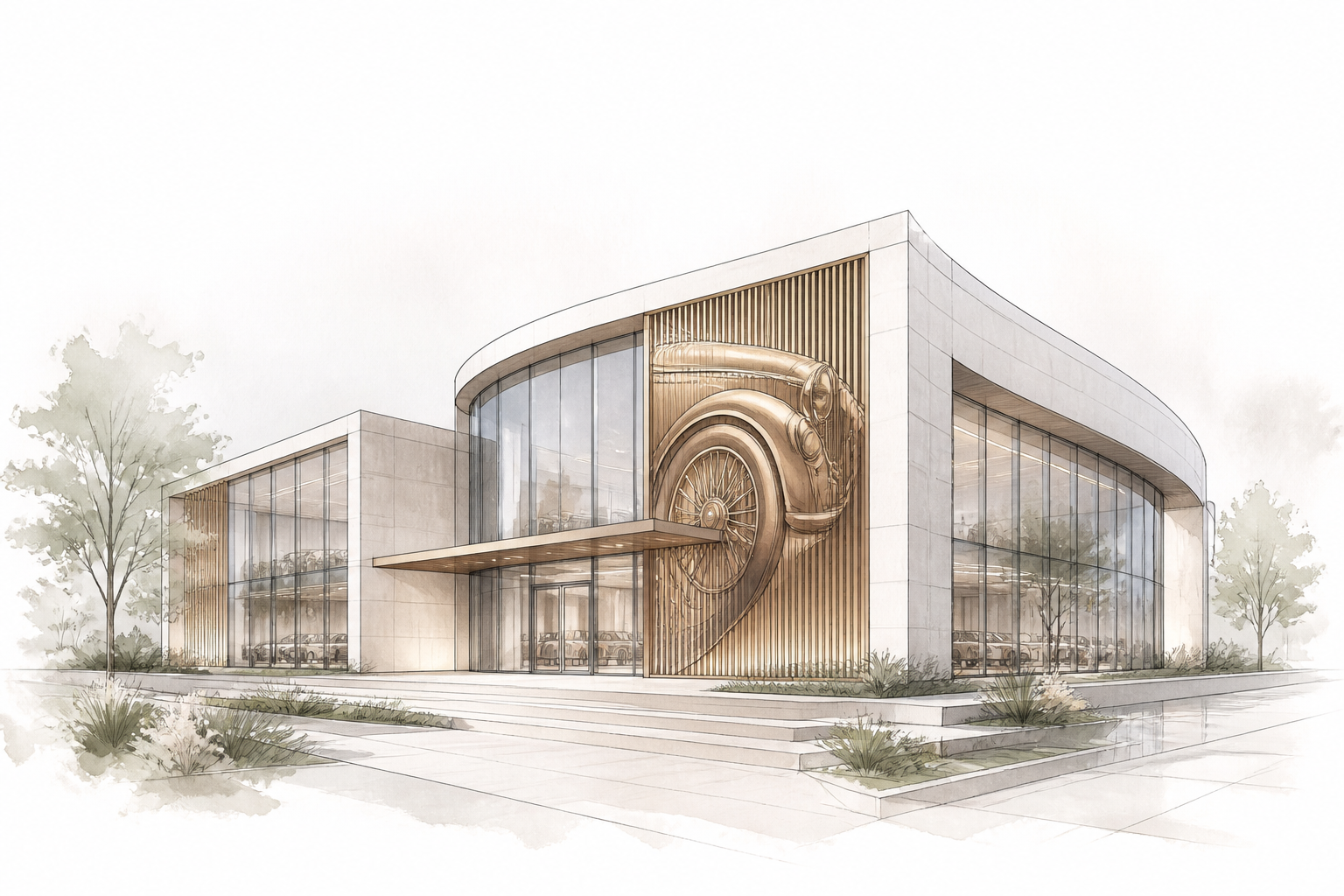
Private Themed Museum (Automotive / Fashion / Weapons) Financial Model
Description
A privately owned themed museum built around a focused collection — automotive history, haute couture, or historical weaponry — generates revenue through multiple streams: tiered admission, annual memberships, exclusive event hosting, retail, and a café. The business thrives on curatorial prestige and a high-touch visitor experience, turning a specialized passion into a for-profit or hybrid cultural venture.
Operations hinge on the interplay between fixed gallery capacity, seasonal tourist and local visitor flows, and upsell opportunities like guided VIP tours and interactive simulators. The model captures daily throughput constraints, dwell times, and the revenue uplift from rotating temporary exhibits that pull repeat visitors and generate press, requiring upfront costs for transport, insurance, and marketing.
Expense structure is collection-dependent. Climate-controlled environments for textiles, secure vaults and surveillance for weapons, and specialized fire-suppression for classic cars all drive facility OpEx. Insurance is modelled as a percentage of exhibited item value, with discrete risk classes. Staffing flexes between baseline curatorial/security teams and peak-month guides, event coordinators, and shop assistants, with overtime rules where applicable.
Capital outlay covers leasehold improvements that mimic exhibition design (lighting, display cases, interactive installations), initial exhibit acquisition or long-term loan fees, and pre-opening branding. The model provides an order-of-magnitude view of total investment, not a turnkey budget, enabling an operator to stress-test the venture’s unit economics and capital structure.
Modeling specifics
- Multi-tier ticket architecture with monthly seasonality indices, allowing each visitor category (adult, concession, family, school group, VIP tour) to follow its own peak and off-peak pattern.
- Standalone event venue P&L with capacity bands, per-head variable costs (catering, staffing, security), and day-of-week / season rate cards, fully integrated with the museum’s visitor calendar.
- Membership base modelled with monthly churn, average revenue per member, and cross-discount bleed – members receive free admission and event discounts that reduce blended ticket yield and event margins.
- Exhibit rotation module that schedules temporary exhibitions, triggers one-off costs (freight, insurance, marketing) and applies an attendance uplift curve that decays over the run of the exhibition, feeding back into ticket and retail revenue.
- Risk-differentiated insurance and security costs driven by collection type: automotive (vehicle storage, fuel handling, fire suppression), fashion (humidity & light control), and weapons (vault, 24/7 monitoring, licence compliance) – each scaled as a percentage of insured value.
- Simulator/experience add-on block (racing rigs, VR fashion runway, virtual shooting range) modelled as per-use revenue with dedicated staffing, maintenance, and depreciation, constrained by hourly capacity and visitor attach rate.
- Donor and sponsorship tiers with naming rights, event activation discounts, and multi-year pledges, including recognition benefits that influence marketing spend and event rental availability.
What's included in the base version
- Comprehensive revenue model: ticket sales by visitor category, annual memberships, event venue rental, gift shop & café, sponsorships, donations, and educational workshops.
- Operating expense build-up: fixed costs (rent, insurance, core security, management) and variable costs (guides, housekeeping, event catering, retail COGS) with monthly granularity.
- CAPEX schedule with phasing: gallery fit-out, exhibit fabrication/acquisition, simulator equipment, pre-opening marketing and working capital.
- Financing module: senior debt with flexible drawdowns, interest capitalisation, and equity contributions.
- Fully integrated monthly P&L, cash flow statement, and balance sheet over the project horizon.
- Investment returns: levered & unlevered DCF, IRR, NPV, payback period, debt service coverage ratios.
- Break‑even analysis and dashboard: visitor KPIs, average revenue per visitor, EBITDA margin, load‑factor, and sensitivity to ticket price and attendance.
Common modeling mistakes
- Using flat monthly attendance – overstates annual ticket revenue by 20–30% and understates the cash trough by 4–6 months, distorting working capital needs.
- Ignoring variable costs in event rental (catering, extra staffing) – inflates event segment margin by 10–20 percentage points and overstates consolidated EBITDA.
- Neglecting collection-specific security and insurance – underestimates annual OpEx by 8–12% of projected revenue, making net income and debt coverage look artificially strong.
- Missing capital for exhibit rotation – understates total investment by 10–15% and overstates project IRR by 3–5 percentage points, shortening payback by 1–2 years.
- Overlooking membership discount dilution – inflates blended ticket price by 5–10% because free admissions and event discounts are not netted against gross ticket revenue.