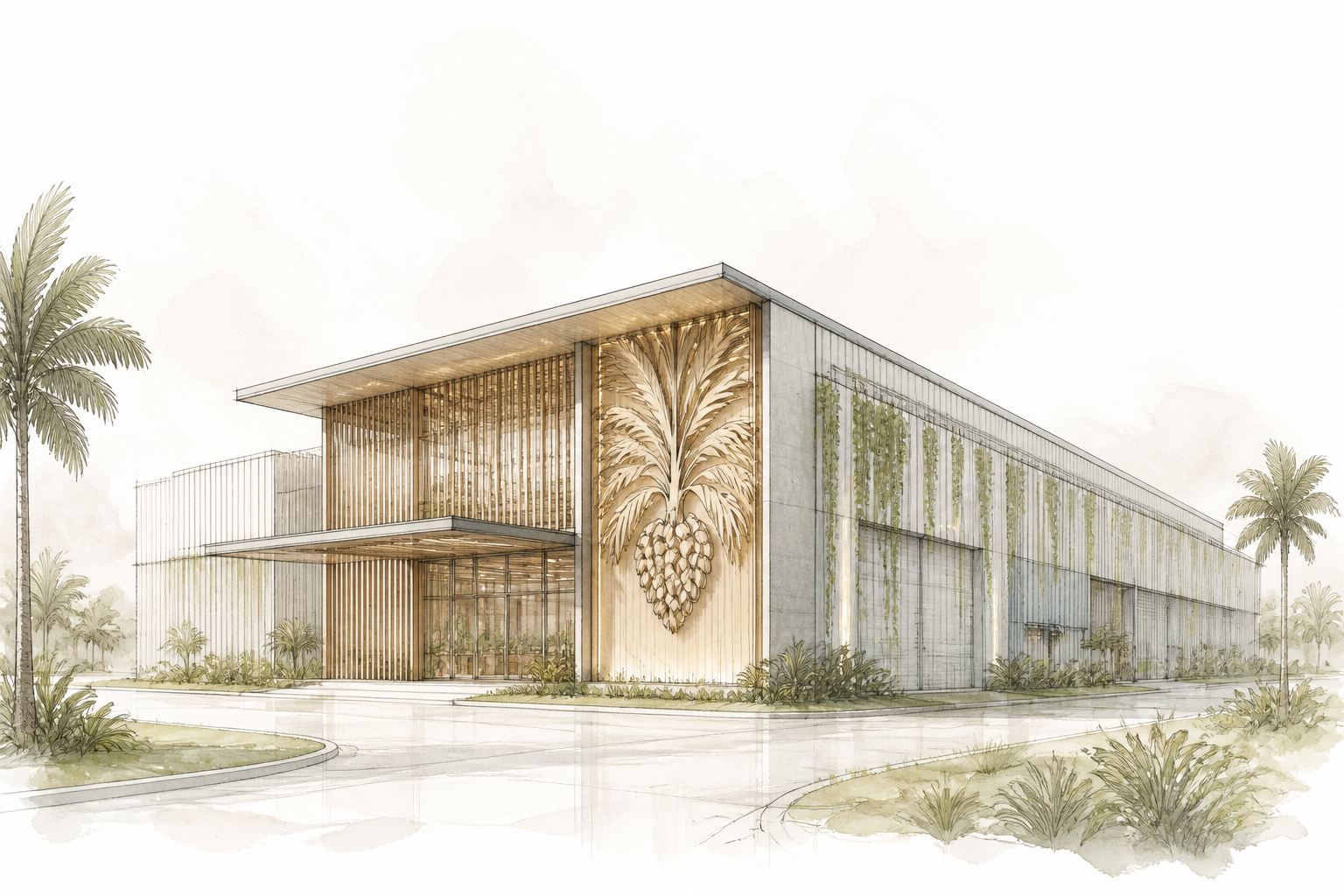
Technical Tropical Crop Plantation Financial Model
Description
A comprehensive financial model for establishing and operating a large-scale technical tropical perennial crop plantation, designed for crops such as oil palm, rubber, cocoa, coffee, or coconut. The model spans the entire lifecycle from land acquisition and nursery development through mature harvesting and eventual replanting, supporting analysis of greenfield projects as well as phased expansion. It integrates biological asset accounting, multi-year agronomic yield curves, and on-site primary processing, providing a complete framework for capital-intensive agricultural investments.
The model captures the unique biological and operational rhythms of perennial agriculture: immature periods with no revenue, ramping-up yields that peak in 7–12 years, and gradual decline thereafter. You can define the planted area, planting density, and block planting schedule to model phased rollouts and staggered cash flows. Crop-specific parameters such as fertilization programs, pest and disease management, and rain-fed vs. irrigated regimes are built in, enabling you to tailor the model to the specific crop and region.
Processing is an integral part of the model. Whether it is a palm oil mill, a coffee washing station, or a latex processing facility, the model allows you to size processing capacity in line with harvested volumes, account for extraction rates, and generate sales of both primary and secondary products. The processing plant’s capital expenditure, O&M, and labor are modeled with a break-even analysis, revealing the impact of processing efficiency on overall project returns.
The financial structure supports various land acquisition and leasing models, off-take agreement pricing, and international certification premiums. Long-term debt with grace periods tailored to the immature phase, working capital fertilizer stocks, and replanting reserve funding are all included. This ensures that the project’s cash flow accurately reflects the deep seasonality and multi-decade horizon of a tropical plantation.
Modeling specifics
- Crop-specific age-profile yield curves: the model moves each planting block through an immature, young mature, peak mature, and declining phase, with yield per hectare changing each year based on the block’s age. This prevents the common error of assuming constant yield, which overstates long-term revenue.
- Phased planting and replanting scheduler: you can define multiple planting tranches and automatically schedule replanting at the end of each block’s economic life. The model recycles the land, re-enters the immature phase, and sources funding from a built-up replanting reserve.
- Biogenic asset accounting under IAS 41: the model tracks the fair value of bearer plants, including establishment costs and changes in fair value, with separate entries for immature and mature plantings, ensuring IFRS-compliant financial statements.
- Integrated processing plant with mass balance: from fresh fruit bunches to crude palm oil and kernels, or equivalent for other crops. The model calculates extraction rates, by-product utilization, and the energy self-consumption of the mill, feeding directly into revenue lines.
- Dynamic working capital for consumables: fertilizer and chemical inventories are modeled with procurement lead times, seasonal application schedules, and safety stocks, capturing the true cash cycle of input-intensive agriculture.
- Land tenure flexibility: options for outright purchase, long-term lease, or concession with staggered payments and land appreciation, as well as provision for land restoration costs at end-of-lease.
- Multi-track certification revenue simulator: the model allows gradual adoption of sustainability certifications (e.g., RSPO, Rainforest Alliance, organic) with associated compliance costs and price premiums, showing the NPV of the certification investment.
- Weather risk and irrigation toggle: the model includes a probabilistic yield dampening factor for rain-fed scenarios based on historical drought frequency, and conversely, irrigation CAPEX and energy costs that stabilize yields.
- Export vs. local offtake pricing: separate pricing tracks for domestic sales, FOB export contracts, and forward sales, with handling, transport, and quality premium/discount logic built in.
What's included in the base version
- Land acquisition/lease cost model with residual value assumptions
- Nursery establishment and planting block rollout scheduler
- Crop-specific maintenance cost module (fertilizer, labor, pest control, pruning)
- Harvesting, collection, and transport cost model linked to yield and distance
- Primary processing plant basic sizing: throughput capacity, extraction rates, and O&M
- Multi-product revenue streams from primary and by-products
- Fully integrated 3-statement financial model (monthly/quarterly/annual)
- Long-term debt structure with grace period, balloon payments, and sculpted repayment
- Taxation, duties, and tax holiday scheduler (where applicable)
- Key investment metrics: project IRR, equity IRR, NPV, payback period, DSCR
Common modeling mistakes
- Assuming a constant plateau yield after maturity instead of using a declining yield curve — overstates cumulative production by 15–30% over a 25‑year cycle.
- Ignoring the replanting cost and cash gap at the end of the economic life — results in a sudden cash shortfall and makes refinancing impossible without fresh equity.
- Treating biological asset depreciation as straight-line instead of fair value measurement under IAS 41 — misstates balance sheet equity and deferred tax by up to 20–40%.
- Modeling processing at 100% extraction rate without accounting for mill inefficiency and by-product losses — overstates gross sales by 5–12%.
- Omitting weather-driven yield variability — leads to a cash flow forecast that is unrealistically smooth and fails to show liquidity stress in drought years.
- Not linking fertilizer and chemical procurement to seasonal application schedules and lead times — inflates working capital availability and understates financing costs.