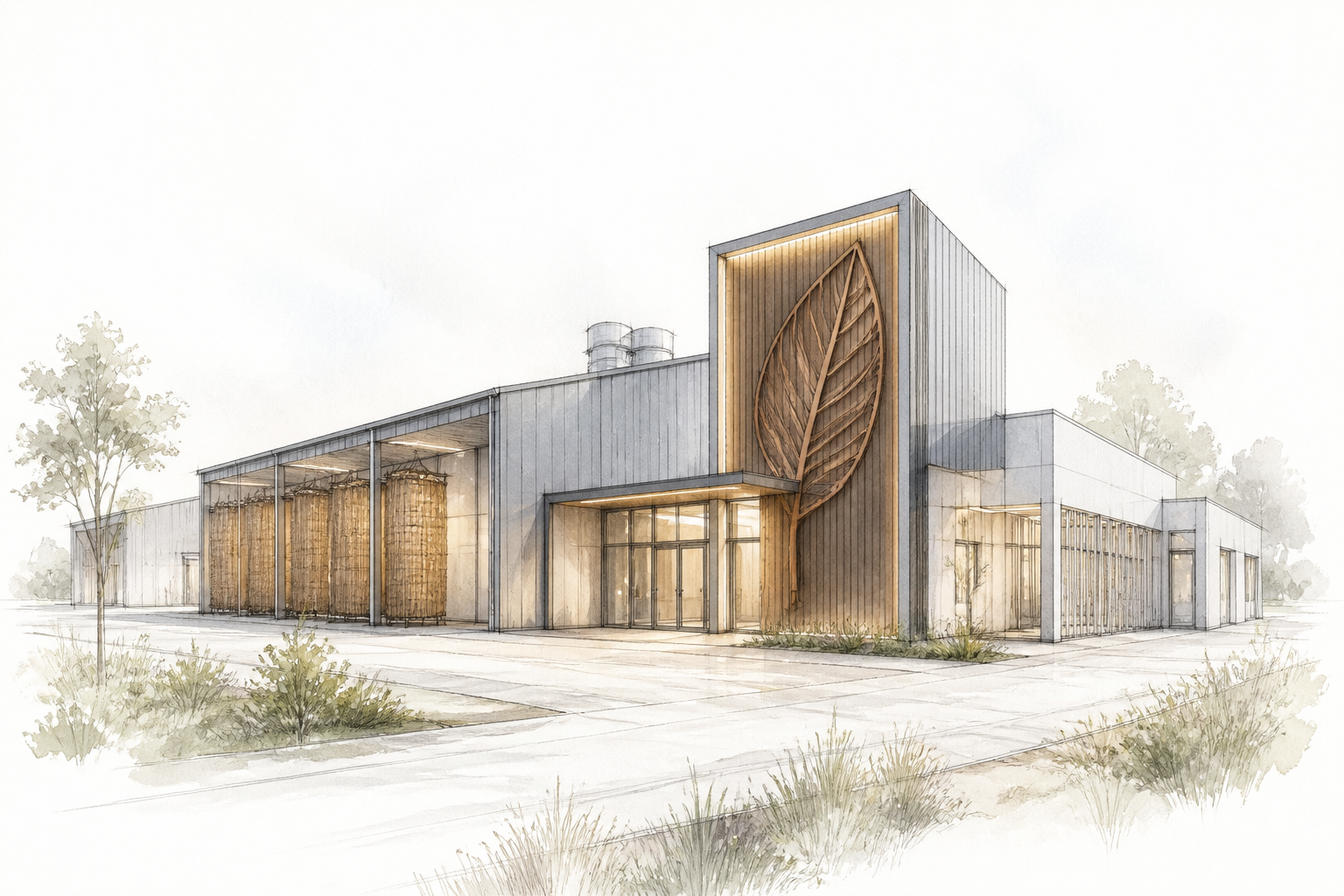
Tobacco Farm Financial Model
Description
A fully integrated financial model for a commercial tobacco farm, covering land preparation, seedling production, transplanting, field management, harvesting, and on-farm curing. The model is built around multi-year crop rotation cycles (typically 2–3 years of tobacco followed by a restorative crop) and captures the nuances of flue-cured, burley, or oriental tobacco, with separate logic for each curing method's infrastructure, energy consumption, and labor profile.
It accommodates both independent growers selling on auction and contracted farmers delivering to leaf merchants. The model automatically calculates leaf revenue based on stalk position grades (lugs, cutters, leaf, tips), projected yield per grade, and contract pricing mechanisms including base price, quality premiums, and volume bonuses. On the cost side, it handles all pre-harvest and post-harvest variable costs—fertilizers, crop protection, curing fuel (coal, gas, or wood), electricity, seasonal and casual labor—with detailed scheduling tied to phenological stages.
The model also incorporates the heavy working capital requirements typical of tobacco farming: funding the long curing and conditioning period, leaf inventory held for up to 12–18 months post-harvest to achieve desired moisture and aging, and the delayed payment cycles from leaf buyers. It includes a curing barn module that tracks capacity utilization, energy efficiency curves, and maintenance schedules. The structure allows for partial mechanization of planting and harvesting, with cost-flex points for manual vs. semi-mechanized operations. While the model provides an indicative total investment range for a medium-scale operation (land, barns, machinery, irrigation), the numbers serve to illustrate the order of magnitude and are fully editable.
Modeling specifics
- Multi-year crop rotation with reversible fallow/cover crop blocks, automatically adjusting field allocation and seasoning costs.
- Leaf grading engine that splits total yield into marketable grades based on agronomic assumptions and assigns grade-specific contract prices.
- Curing barn capacity model (bulk or tier) with throughput time, energy use per kg of cured leaf, and annual utilization optimization.
- Fuel-switching logic in curing: the model lets the user toggle between coal, natural gas, LPG, or sustainable biomass, with real-time cost recalculation.
- Seasonal labor staffing curve linked to key operations (topping, suckering, harvesting, stringing), with daily wage rates and overtime thresholds.
- Working capital facility tailored to purchased leaf tobacco inventory holding periods and buyer payment terms, distinguishing between pre-sold and open-market lots.
- Contract vs. auction revenue stream separation, allowing a mix of fixed-price contracted volumes and residual auction sales with volatility bands.
- Capital replacement reserves for curing barns and high-wear equipment (harvesting rigs, irrigation pumps) based on hours of operation, not just years.
What's included in the base version
- Land preparation and crop establishment (seedbed, transplanting) cost calculator
- Crop yield and leaf grade distribution model with grade price matrix
- Curing barn capacity, throughput, fuel, and electricity modules
- Variable input costs (fertilizer, crop protection, suckercides, fuel, hired labor) linked to field operations calendar
- Fixed overhead and indirect costs (farm management, insurance, property taxes, equipment depreciation)
- Working capital and inventory build-up schedule for cured leaf and inputs
- Multi-annual P&L, cash flow, balance sheet with automated farm-unique line items
- Financial ratios, debt service coverage, and break-even price per kg by grade
- Scenario manager for acreage, yield, grade mix, and input price assumptions
Common modeling mistakes
- Ignoring crop rotation fallow costs — underestimates total land cost per kg by 15–30% over a full rotation cycle.
- Applying a single all-in yield without grade splits — overstates average selling price by 5–18% because low-grade leaf (tips, lugs) is sold at a steep discount.
- Modeling curing barns with nameplate capacity and no utilization factor — overstates throughput by 10–20% and deflates unit capex per kg.
- Treating green leaf inventory as a short-term asset — understates working capital need by 2–5x because cured leaf may be held 12–18 months before sale.
- Assuming constant fuel efficiency across curing runs — over- or underestimates energy costs by 8–15% if seasonal humidity and barn aging are not considered.
- Lumping all labor into a flat annual FTE cost — masks the peak-season wage spikes that can inflate labor costs by 25–40% during harvest and stringing.