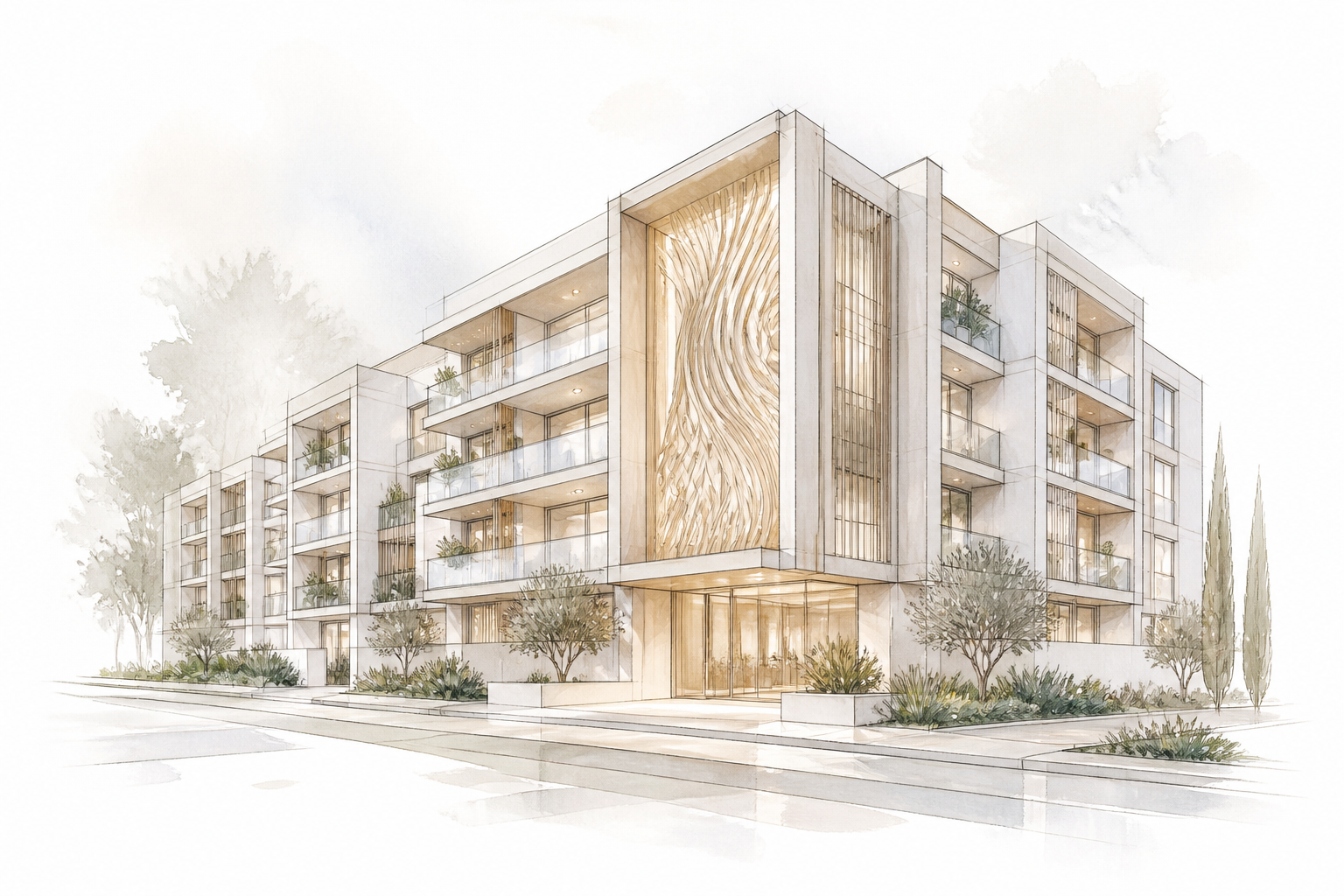
Apartment Development Financial Model
Description
The model is built for a ground-up apartment development project, covering the full lifecycle from land acquisition through construction, lease-up, stabilization, and final exit. It accommodates complex capital structures with senior debt, mezzanine financing, and multiple equity tranches—ideal for deals involving joint ventures or institutional investors. The total investment is estimated at an order-of-magnitude level: users input their own cost assumptions, and the model automatically calculates the full capital stack and draw schedule.
Unlike generic real estate pro-forma templates, this model dynamically simulates phased unit delivery and lease-up absorption curves, accounting for concessions, seasonal patterns, and tenant improvement allowances. The revenue build-up is granular, allowing per-unit-type rent schedules, vacancy loss, and operational expense escalations tied to CPI or custom indices. The stabilized net operating income (NOI) feeds into both a discounted cash flow valuation and an exit cap-rate analysis, with refinancing logic that tests multiple loan-to-value and debt service coverage constraints.
Advanced sensitivity and scenario planning capabilities let users stress-test assumptions such as construction cost overruns, delays in lease-up, interest rate fluctuations, and exit cap rate compression. Outputs include project-level and equity-level internal rate of return (IRR), net present value (NPV), equity multiple, and cash-on-cash yields, providing a comprehensive view of risk-adjusted returns. The model is designed to be audit-friendly, with clear color coding, dedicated assumptions tabs, and error-checking warnings throughout.
Modeling specifics
- Phased construction with multiple buildings or sections, allowing staggered delivery and lease-up start dates.
- Interest capitalized through construction and lease-up, including interest on interest, ensuring accurate cash flow timing.
- Absorption curves per unit type with seasonal adjustments and move-in concessions, preventing overstated early revenues.
- Dual-exit modeling: both a stabilized sale at a cap rate and a refinancing scenario with LTV/DSCR constraints.
- Dynamic construction draw schedule linked to S-curve production, with automatic interest calculation on outstanding balances.
- Built-in scenario manager for sensitivity on key inputs (construction costs, rental rates, cap rates) with tornado output.
- Granular operating expense model with fixed and variable components, CPI escalators, and reserve for replacement.
- Dashboard with project and equity IRR, NPV, equity multiple, and cash-on-cash returns, with error-trapping for circular references.
What's included in the base version
- Assumptions dashboard for key inputs (project timeline, unit mix, rent, costs, financing).
- Hard and soft cost budget with contingency and escalation.
- S-curve construction draw schedule with interest capitalization.
- Unit delivery and lease-up absorption schedule with per-unit-type rental revenue.
- Lease-up concessions (free rent) model.
- Operating expense build-up (fixed and variable, replacement reserves).
- Senior debt facility with interest-only period, amortization, and refinancing options.
- Equity cash flow waterfall (single-class LP/GP split with one promote hurdle).
- Discounted cash flow valuation (stabilized NOI, terminal value via cap rate).
- Scenario manager and one-dimensional data tables (sensitivity).
- Dashboard with KPIs, charts, and executive summary.
Common modeling mistakes
- Assuming 100% occupancy from delivery — overstates NOI by 20–35% in the first two years.
- Neglecting lease-up concessions (free rent, TI allowances) — understates initial capital outlay and overstates net effective rent.
- Using a flat monthly absorption curve without seasonality — overstates year-1 net operating income by 10–15%.
- Capitalizing construction interest only through completion, not through lease-up — understates total debt by 5–10% and delays equity returns.
- Omitting replacement reserves in operating expenses — inflates stabilized NOI by 3–5% and understates future re-leasing costs.
- Modeling refinance without yield maintenance or prepayment penalties — overstates refinance proceeds by 2–4% of loan amount.
- Not distinguishing between project-level and equity-level cash flows in JV structures — leads to incorrect IRR analysis for partners.
- Ignoring interest rate floor on floating-rate debt — understates debt service in rising-rate environments.