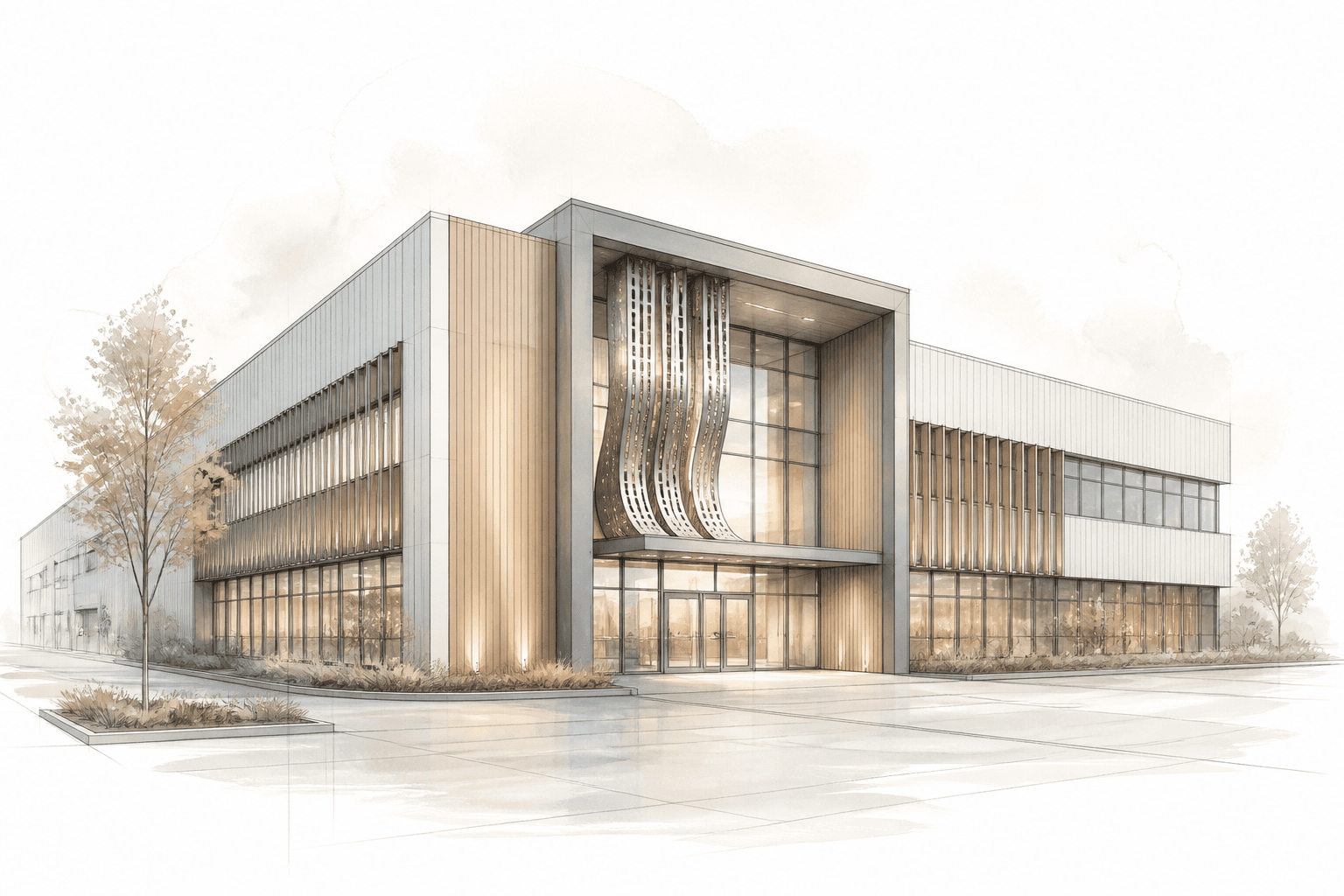
Cable Tray and Duct Plant Financial Model
Description
The model covers a production facility manufacturing a range of cable management products — from steel ladder and perforated trays to wire mesh trays and PVC trunking ducts. The plant is modeled with distinct production lines for metal fabrication and plastic extrusion, allowing the user to set capacity, shift patterns, and output mix per product group.
It incorporates detailed cost drivers: steel coil and PVC compound consumption rates, scrap generation with recycling revenue, in-house vs outsourced galvanizing or powder coating, and energy loads by equipment. A demand-driven capacity ramp-up module links production volumes to order intake assumptions.
The investment calculation aggregates machinery (CNC punching, bending, welding, galvanizing line, extrusion lines), factory building or leasehold improvements, and initial working capital. The financial outputs include full three-statement projections, project IRR, debt service coverage, and scenario analysis for raw material price and sales volume sensitivities. The model provides an order-of-magnitude investment estimate reflecting typical medium-scale plant configurations, not a firm quote.
Modeling specifics
- Production capacity is broken down by product group (ladder, perforated, wire mesh, PVC duct) with individual cycle times and machine constraints, preventing over-allocation of shared equipment.
- Scrap generation is modeled as a percentage of input weight per product type, with separate revenue from selling scrap steel/aluminum, impacting net material cost.
- A dedicated surface treatment selector allows users to compare in-house hot-dip galvanizing versus outsourced job-coating costs, including infrastructure capex and variable consumables.
- Labor force is structured by shifts and workstation, with built-in overtime premiums that automatically activate when production volumes exceed base shift capacity.
- Raw material bill-of-materials uses gauge-specific steel coil requirements, allowing price differentiation for pre-galvanized, mild steel, or aluminum inputs.
- Energy consumption is calculated per major machine category (press, welding, galvanizing furnace, extrusion line) and aggregated into a utility block with tiered tariffs.
What's included in the base version
- Production capacity and mix model by product group
- Raw material consumption (steel coils, PVC compound) with scrap rates
- Direct labour planning by shift with overtime
- Manufacturing overhead allocation
- Capex schedule for machinery and building
- Debt financing and repayment module
- Three-statement financial model (P&L, cash flow, balance sheet)
- Project IRR, NPV and payback period
- Scenario manager for volume and raw material price
Common modeling mistakes
- Assuming 100% material yield without scrap — material cost is understated by 5–12%, and working capital for raw materials is also underestimated.
- Applying a flat utilization rate across all product lines without bottleneck analysis — production volume is overestimated by 15–25%, leading to unrealistically high revenue.
- Using a single surface treatment cost per kg regardless of complexity — gross margin error of 3–7 percentage points when product mix changes.
- Not linking labour cost to actual shift patterns and overtime — can underestimate direct labour cost by 10–20% in peak demand scenarios.