Commercial Photo Studio for Rent Financial Model
Description
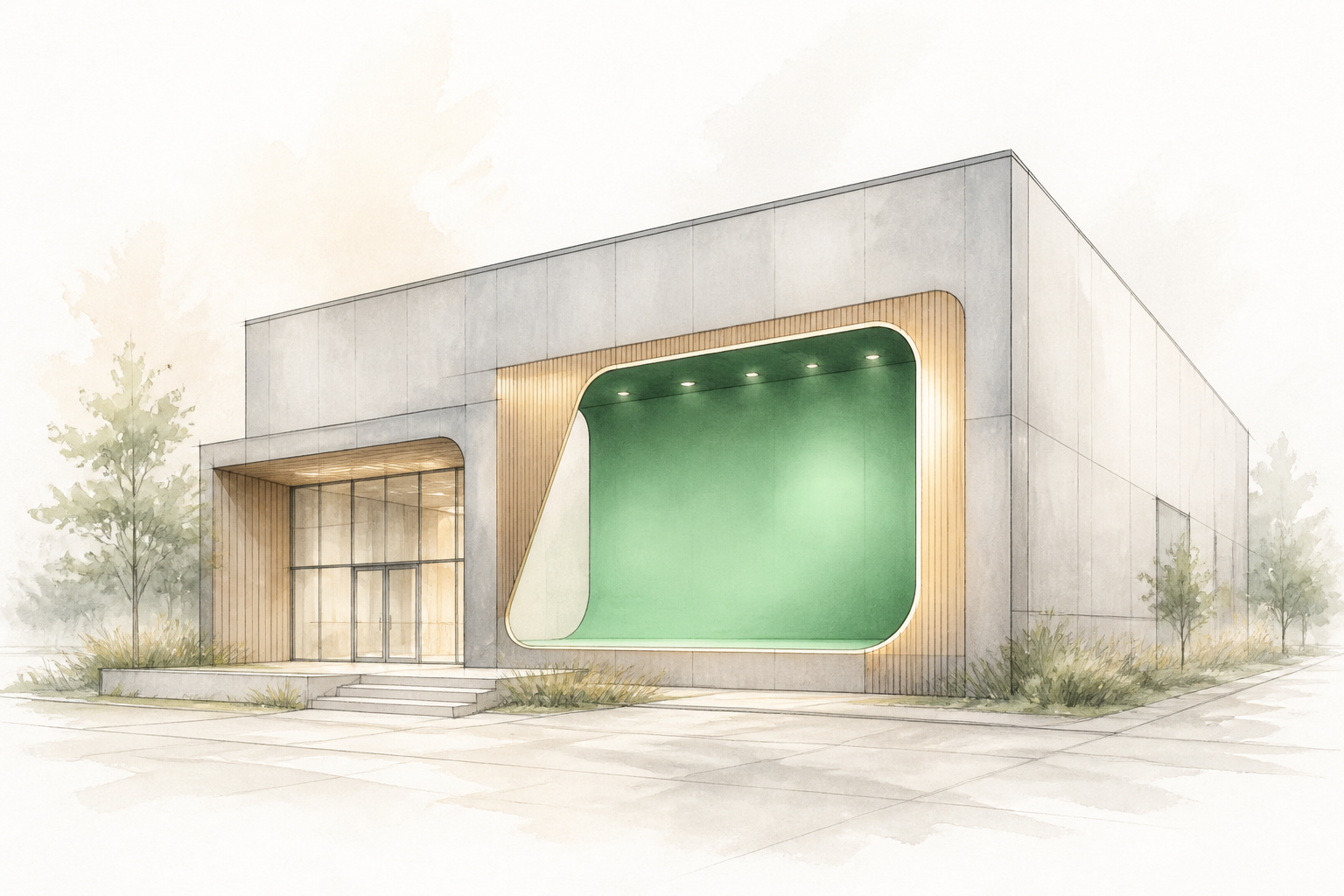
This financial model is built for a commercial photo studio offering hourly and daily rentals of fully equipped shooting spaces to photographers, videographers, and creative agencies. The studio may have multiple distinct rooms—for example, a daylight studio, a cyc wall infinity room, and a blackout studio—each with its own capacity, equipment set, and pricing tiers by hour, half-day, or full-day packages. The model captures the operational logic of a booking-driven business, including calendar occupancy, partial-session billing, and seasonal demand shifts (wedding season, holiday campaigns).
Beyond core room rental, the model incorporates add-on revenue from premium equipment hires (light kits, specialty lenses, grip gear), optional post-production workstations, and membership/subscription plans that generate recurring income. Cost drivers include facility lease, utilities, insurance, staffing (studio manager, assistants, reception), equipment depreciation with multiple asset lifespans, and periodic maintenance or breakage. The structure enables evaluation of studio profitability from a single location and serves as a base for scaling to multiple sites.
Modeling specifics
- Multi-room booking calendar with hourly granularity and distinct utilization curves per room type, recognizing that a daylight studio and a cyc wall room fill at different rates and attract different client profiles.
- Partial-hour billing logic that prorates rates for bookings not aligned to full-hour blocks, avoiding revenue understatement from rounding in fixed hourly models.
- Equipment rental module treating cameras, lighting, and grip as separate asset classes with distinct depreciation schedules, maintenance costs, and replacement cycles—preventing blending that masks true capex needs.
- Subscription revenue modeling with churn rates, tiered plans (monthly/quarterly/annual), and utilization caps, reflecting the real-world hybrid business model of many modern studios.
- Seasonal occupancy curves calibrated to commercial photography demand cycles—a flat annual utilization assumption can overstate revenue by 15–25% in off-peak months.
- Breakage and loss provisioning based on historical equipment failure rates, included as a direct cost margin rather than a lump sum emergency fund, protecting net margin from unexpected write-offs.
What's included in the base version
- Revenue model: hourly/daily room bookings by studio type, equipment rental, membership/subscription plans, and ancillary services
- Direct cost model: facility rent, utilities, insurance, consumables, staff salaries, equipment maintenance & repairs, marketing
- Fixed asset register with depreciation by class (leasehold improvements, cameras, lighting, grip, computers)
- Financing: equity injection, bank loan with custom amortization, and equipment finance line
- Three-statement financials (P&L, Cash Flow, Balance Sheet) on monthly basis for up to 7 years
- Key metrics dashboard: occupancy rate, revenue per available studio hour (RevPAS), average rental rate, EBITDA margin, cash runway
- Scenario & sensitivity analysis tables for room rates, occupancy, opex, and capex
Common modeling mistakes
- Assuming uniform occupancy across all months without seasonal adjustment—revenue overstatement can reach 20–30% because commercial photography demand drops sharply in January/February and late summer.
- Combining all equipment into a single asset line—cameras depreciate much faster than grip gear, understating replacement capex by 2–3× over a 5-year horizon.
- Modeling rental as full-hour blocks only—short sessions (e.g., 1.5-hr bookings) often represent 15–25% of reservations; rounding down to the hour understates revenue per booking by 10–20%.
- Treating membership revenue as pure profit with no capacity cost—a surge in member usage can force additional room capacity, eroding expected margin by 5–10 percentage points.
- Ignoring in-use equipment breakage and theft—a 2–4% annual loss rate on portable items can reduce net profit margin by 3–6% when no provision is built into pricing.