Mobile Mammography Unit Financial Model
Description
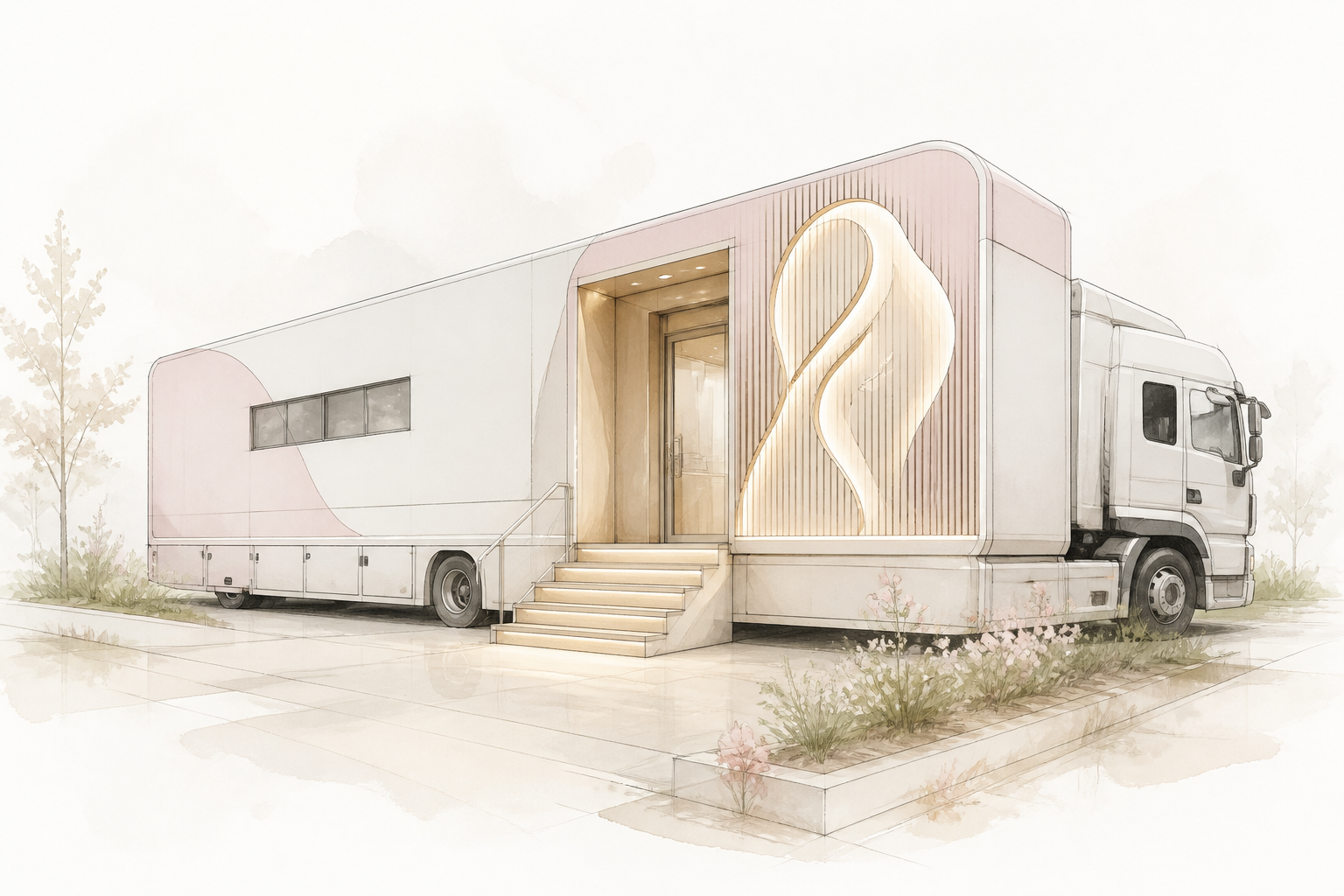
A Mobile Mammography Unit operates a coach or trailer housing a full mammography suite, traveling to employer campuses, community centers, and underserved locations. Revenue is generated per screening, billed to a mix of payers (commercial insurance, Medicare, Medicaid, self-pay), each with distinct reimbursement rates, coding requirements, and collection timelines. The model is built to capture these dynamics from day one, not as an afterthought.
At the heart of the model lies a granular, route-based scheduling engine. You define your weekly circuit: which sites are visited on which days, drive time between stops, hours of operation at each location, and appointment slots per hour. Patient throughput is then modeled with slot-specific no-show rates and trailer capacity limits, reflecting real-world constraints that directly drive revenue and staffing requirements. Equipment can be acquired via outright purchase or lease, with separate depreciation and interest schedules, while annual service contracts—typically ranging from 8–12% of equipment cost—are built in from the start.
Compliance modeling has been given special attention: MQSA certification and inspection fees, ACR accreditation costs, medical physicist surveys, and state-specific mobile facility licenses are all accounted as recurring line items. Staffing includes dedicated mammography technologists, a driver, and remote radiology (teleradiology), with payroll taxes, benefits, and overtime rules. The model also tracks fuel, vehicle maintenance, generator operation, parking permits, and marketing to secure site partnerships. Investment estimates are presented to show the order of magnitude—not final figures—allowing you to assess project scale before locking in any capex data.
Modeling specifics
- Granular route-building: plan a multi-stop weekly schedule, assign drive times, operating hours, and patient slot density per stop – every change instantly recalculates revenue and costs.
- Appointment-based throughput with variable no-show rates by location type (corporate vs. community) and time-of-day factors, preventing systematic overestimation of billable scans.
- Equipment acquisition module: side-by-side comparison of outright purchase vs. leasing (capital/finance/operating), with residual value, advance payments, and interest rate assumptions, plus automatic service contract provisioning at 8–12% of equipment cost.
- Multi-payer revenue modeling: define up to 5 payer categories (commercial, Medicare, Medicaid, self-pay, grant-funded), each with its own fee schedule, coding mix, and days-in-accounts-receivable timeline.
- Full regulatory cost tracker: MQSA certification fees, ACR accreditation, medical physicist surveys, and state mobile facility permits, all built as recurring annual/periodic line items that escalate with inflation.
- Staffing engine tied to service hours: calculates technologist and driver shifts per stop, with overtime triggered by throughput, and a separate teleradiology cost per interpretation – no flat headcount assumptions.
- Vehicle operating expenses driven by route mileage (fuel, maintenance, tires) and generator hours, distinguishing between transit and stationary operation.
- Scalable unit count: a switch to add a second mobile unit replicates all route, staffing, and licensing logic, enabling analysis of fleet expansion without rebuilding the model.
What's included in the base version
- Executive dashboard with annual and monthly KPIs (scans performed, revenue per scan, utilization rate, EBITDA margin trend).
- Weekly route builder: define up to 10 stops per week, with travel time, on-site hours, and appointment slot density.
- Patient flow model: appointment slots × slot utilization × no-show rate per stop → daily scan count, with walk-in overflow logic.
- Multi-payer revenue module: separate fee schedules for commercial, Medicare, Medicaid, self-pay, and grant, each with distinct collection timelines.
- CapEx schedule: mobile unit chassis and conversion, mammography machine, ancillary equipment, IT systems, with depreciation setup (straight-line or MACRS).
- Equipment procurement options: outright purchase vs. lease (capital, operating), with interest rate, term, and residual value inputs.
- Staffing model: mammography technologists, driver, and radiologist (in-house or teleradiology), with overtime rules, benefits, and training costs.
- Operating expense detail: fuel, vehicle maintenance, generator fuel and maintenance, medical malpractice and auto insurance, MQSA/ACR fees, marketing.
- Working capital and accounts receivable: calculates days of revenue outstanding per payer and initial cash needed to fund operations until collections stabilize.
- Tax assumptions and automatic profit distribution logic (if applicable).
Common modeling mistakes
- Applying a flat no-show rate of 5% across all site types without adjusting for corporate vs. community locations – overestimates billable scans by 10–15% and misallocates staffing.
- Modeling each stop as a full 8-hour scanning day without subtracting drive time, setup, and mandatory breaks – inflates daily patient throughput by 8–12%, leading to unrealistic revenue projections.
- Ignoring the time lag between service date and cash receipt by using a single average collection period – understates working capital requirements by 20–30% and misrepresents liquidity during ramp-up.