Pastry Shop (Patisserie) Financial Model
Description
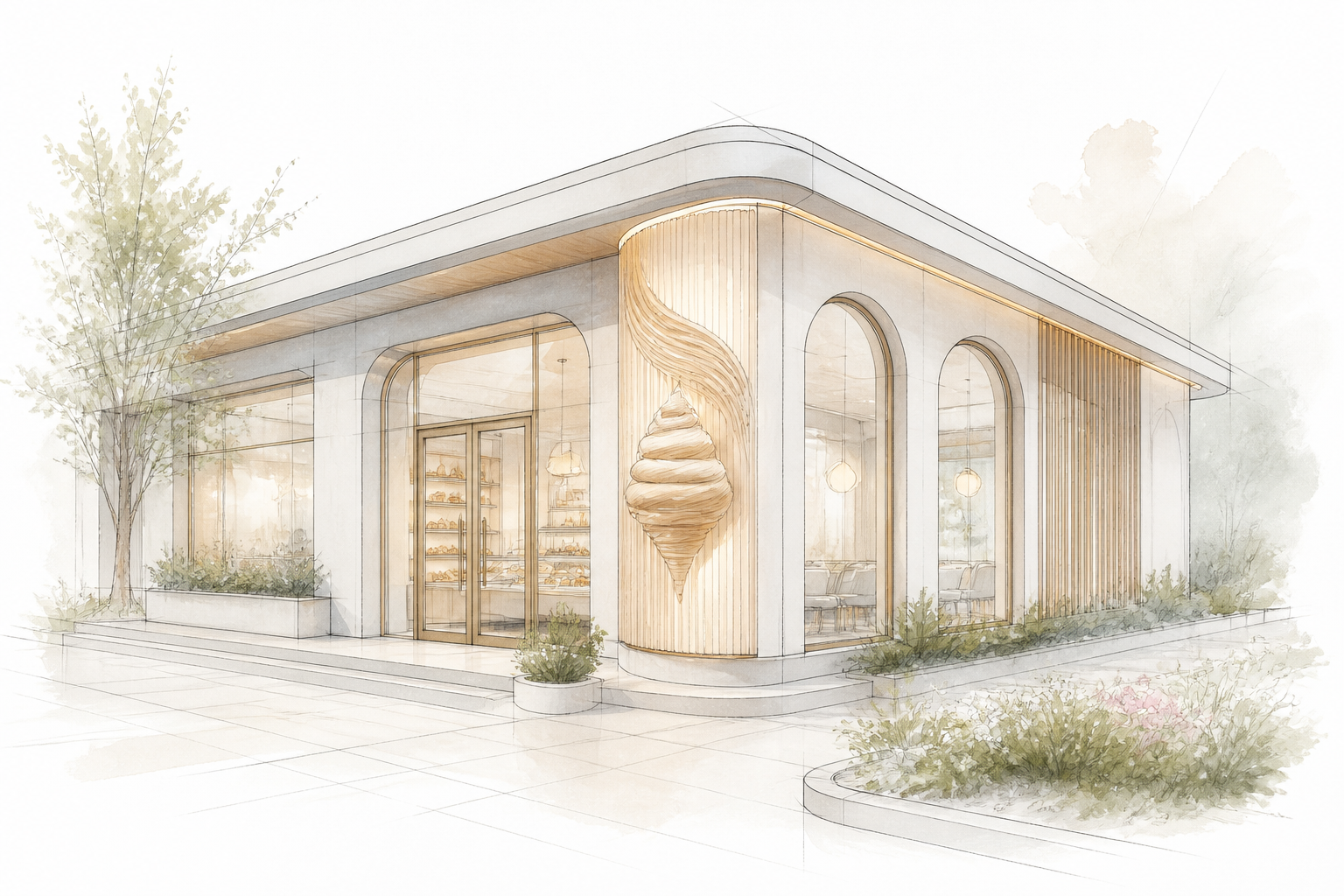
The model covers the full lifecycle of a brick-and-mortar patisserie, from lease negotiation and interior fit-out to hiring pastry chefs and launching marketing campaigns. It captures two main revenue streams: walk-in retail sales (counter and café seating) and B2B wholesale deliveries to hotels, restaurants, and corporate clients, each with its own price structure and payment terms. For illustration, a typical 60–100 sqm patisserie with a small production kitchen usually requires an initial investment on the order of $300k–$800k, though the model scales to a wide range of concepts.
Production is modelled in detail: the product mix is broken into categories such as viennoiserie, individual pastries, entremets, tarts, and beverages, each with its own bill of materials, labour minutes per batch, and shelf life. The model accounts for daily baking cycles, oven and cooling capacity constraints, and a waste algorithm that tracks unsold items by freshness day—full price on day one, discount on day two, and write-off on day three. Seasonal demand curves with month-by-month multipliers and day-of-week profiles feed into this, automatically adjusting production planning and raw material purchasing. Special holiday surges (Christmas, Valentine’s Day, Mother’s Day) can be calibrated separately.
The financial structure itemises capital expenditure into leasehold improvements, kitchen and display equipment, POS/IT, and initial inventory, along with pre-opening expenses and working capital to cover negative cash flow during ramp-up. Operating costs cover rent, skilled labour (production and front-of-house), utilities, marketing, delivery logistics, and maintenance agreements for specialized equipment. Outputs include full monthly financial statements for up to five years, break-even analysis, and sensitivity tables around key value drivers such as average retail check, wholesale volumes, and ingredient cost inflation. The model shows the order of magnitude of required investment and potential returns, allowing users to tailor every assumption to their specific location and concept.
Modeling specifics
- Product mix matrix with distinct COGS, labour content, and shelf life per category (e.g., croissant vs. mousse cake) — generic templates treat all items as one ‘product’, overstating margin and ignoring waste differences.
- Dynamic waste model tied to daily batch production and sell-through, with freshness-based price degradation — prevents the common error of assuming 100% sell-through that inflates revenue by 5–15%.
- Seasonal and day-of-week demand curves built into the operational sheet, with separate holiday peak support — without this, labour scheduling and inventory orders are mismatched, driving up costs.
- Wholesale channel with configurable payment terms (net 30/60/90), volume-based discounts, and delivery cost allocation — standard models often treat wholesale as cash on delivery, understating working capital need by 20–30%.
- Labour modelling split into production (pâtissier, commis) and front-of-house (barista, sales), with productivity ratios linked to output volume and store traffic — avoids blanket ‘labour % of revenue’ assumptions that break at low or high volumes.
- CapEx module with separate line items for specialised equipment (dough sheeter, blast freezer, tempered chocolate machine) and ongoing maintenance contracts (typically 6–10% of equipment cost annually) — ensures the initial investment estimate is not underestimated.
What's included in the base version
- Revenue model for retail (walk-in and café) and wholesale channels, with adjustable average ticket, daily covers, and wholesale volume assumptions.
- Product category builder (viennoiserie, pastries, cakes, tarts, beverages) with distinct COGS recipes and variable labour per unit.
- Personnel planner covering production chefs, front-of-house staff, and delivery drivers, with headcount scaling based on volume triggers.
- Operating expenses: rent, utilities, marketing, insurance, cleaning, credit card fees, and delivery partner commissions.
- CapEx schedule detailing leasehold improvements, kitchen and display equipment, POS/IT, initial inventory, and pre-opening costs.
- Financing structure with equity injection, bank loan drawdowns, and flexible repayment schedules.
- Integrated monthly financial statements (P&L, cash flow, balance sheet) for up to 5 years.
- Standard dashboards with unit economics per product category, break-even point, payback period, and key profitability ratios.
Common modeling mistakes
- Treating all products as having identical margins and waste profiles — gross margin overstated by 10–20% because high-waste items like fruit tarts are blended with long-life pastries.
- Assuming 100% daily sell-through — overestimates monthly revenue by 5–15% and entirely misses the cost of markdowns and discards.
- Ignoring wholesale payment terms (net 30–60) — inflates cash on hand by 20–25% in the first quarter and hides the need for additional working capital.
- Using flat monthly sales without day-of-week and seasonality — leads to underestimating peak labour costs and inventory build-up before holidays, distorting EBITDA and cash flow.
- Omitting specialised equipment maintenance contracts (6–10% of equipment cost per year) — CapEx appears adequate but operating costs soon exceed budget, eroding margin.