Portable Building and Container Module Plant Financial Model
Description
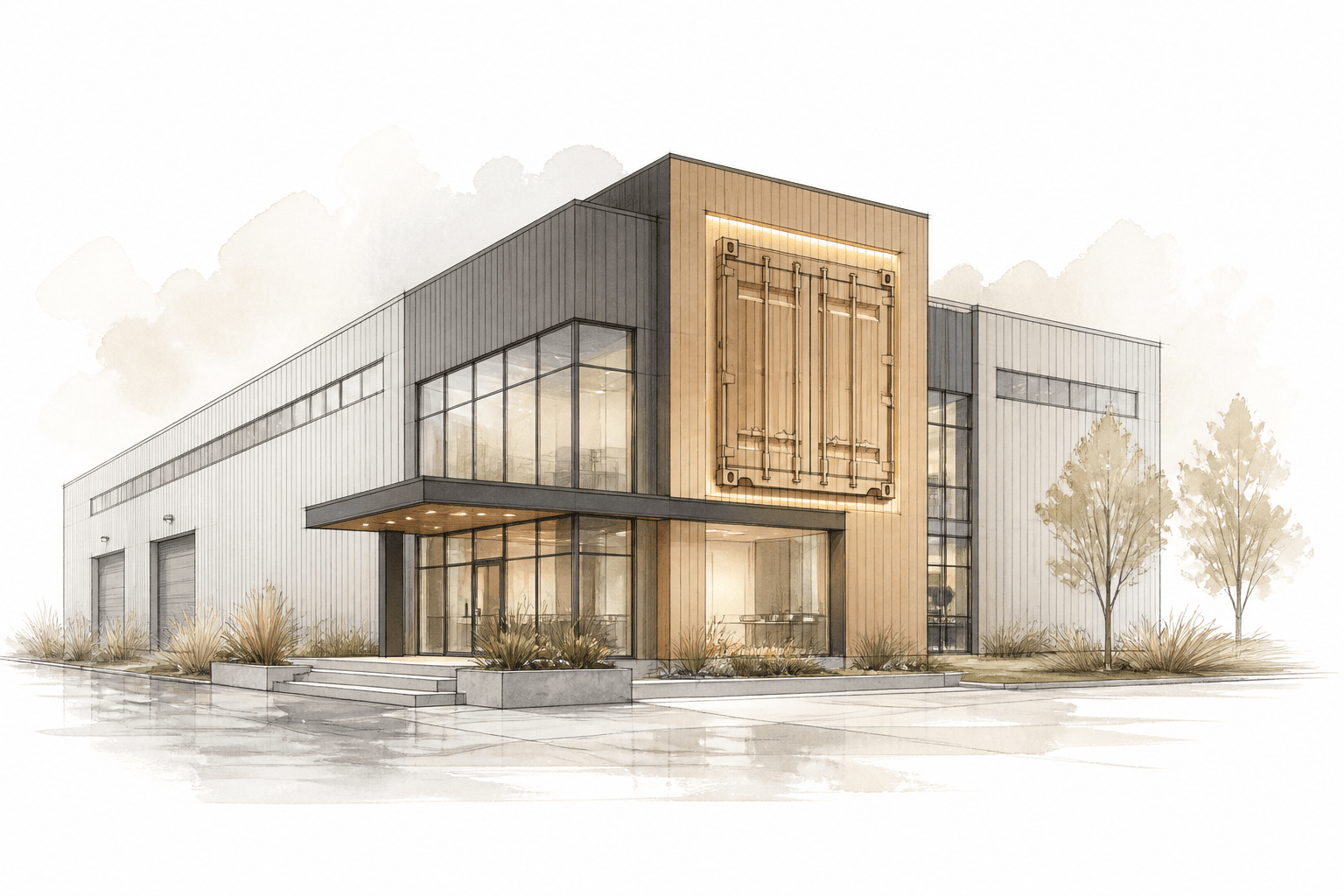
The model covers a production plant manufacturing portable buildings and container-based modular units — site offices, accommodation cabins, ablution blocks, and multi-module complexes for construction, mining, and commercial use. It supports an unlimited number of product families, each with distinct material specifications, labor routings, and machine-hour requirements. The investment phase encompasses land development, factory construction, production line equipment (welding stations, panel fabrication, spray painting), and pre-operative costs, with all amounts shown as indicative order-of-magnitude figures.
Production is modelled by work center capacity: steel frame fabrication, panel assembly, insulation and lining, MEP fitting, and quality control. The model translates a sales plan into daily production schedules, constrained by shift patterns, machine availability, and minimum batch sizes. Material procurement is driven by bills of materials and production orders, factoring in supplier lead times, MOQs, safety stock, and inbound freight — preventing both stock-outs and excess inventory.
On the commercial side, the model handles both standard unit sales (recognised on dispatch) and bespoke project contracts with customer-specific engineering. For projects, revenue is recognised via percentage-of-completion based on physical milestones (order confirmation, frame complete, assembly complete, delivery, handover), and payment terms include advances, progress billings, and retention. The financial statements (P&L, cash flow, balance sheet) are fully integrated and span a 10-year horizon, capturing the seasonal working capital swings typical of the construction supply industry.
Modeling specifics
- Bill-of-material engine with variant configuration: each product family (e.g., 20ft office cabin, 40ft combo unit, 2-storey module) can have multiple sub-types defined by size, internal layout, cladding, and optional equipment, automatically rolling up material specs, labor hours, and machine time.
- Work center capacity modeling with bottleneck analysis: the plant is divided into cutting, welding, panel assembly, spray painting, and finishing stations; each has its own throughput rate, shift schedule, and changeover time, determining the maximum feasible output per product mix.
- Material requirements planning (MRP) with lead-time offsets and minimum order quantities: purchase orders are automatically generated based on production schedules for steel coils, sandwich panels, insulation, windows, flooring, and MEP components, with lead times and safety stock buffers.
- Work-in-progress valuation: costs are accumulated as units move through fabrication stages, with direct materials, direct labour, and manufacturing overheads accurately allocated to each module based on its completion percentage, providing a true picture of inventory and cost of goods sold.
- Project milestone revenue recognition: for customised orders, the model tracks advances received, progress billings at key production milestones (e.g., frame welding done, paneling done, ready for dispatch), and retention receivables, matching revenue to physical completion rather than cash receipts.
- Rental fleet economics as an optional segment: users can allocate a share of output to a rental fleet, with a dedicated module managing unit capitalisation, depreciation, maintenance cycles, utilization rates, and recurring rental income streams — enabling side-by-side comparison of selling vs renting returns.
- Seasonal demand shaping: monthly sales volumes can be adjusted using seasonal indices, allowing the model to simulate build-up of finished goods inventory in low season to meet peak demand, and calculating the corresponding impact on working capital and storage costs.
What's included in the base version
- Unlimited product families with configurable bill of materials (BOM) and routings
- Production capacity and scheduling model by work center with shift patterns
- Material requirements planning (MRP) with supplier lead times, MOQs, and safety stock
- Inventory management: raw materials, work-in-progress, and finished goods
- Project contract revenue modelling with milestone billing and retention
- Capital expenditure schedule with phased outlays and depreciation
- Direct and indirect workforce planning (production, maintenance, admin)
- Integrated financial statements (monthly, 10 years): P&L, cash flow, balance sheet
- Debt and equity financing structure with multiple tranches
- Scenario manager for volume, price, and key cost drivers
Common modeling mistakes
- Using a single average material cost per unit instead of a BOM-based calculation — overstates gross margin of fully fitted units by 15–25% and underestimates standard units, leading to wrong product mix decisions.
- Neglecting work-in-progress in working capital — as production cycles last 2–4 weeks, unfinished modules tie up significant materials and labour; ignoring them inflates free cash flow by 20–30%.
- Recognizing all revenue upon shipment rather than by milestone for project orders — cash inflow is overstated in early months, while retention and post-delivery receivables are overlooked, shifting debt drawdowns by 30–60 days.
- Assuming uniform monthly production without seasonal sales variation — leads to inventory peaks and capital lock-up in low season, and stock-outs in high season, with a financing impact of +10–15% on peak borrowing.
- Overlooking minimum order quantities and lead times for key raw materials — causes unrealistic procurement timing; a steel coil order gap can halt the production line for 2–4 weeks, delaying deliveries and triggering penalties.