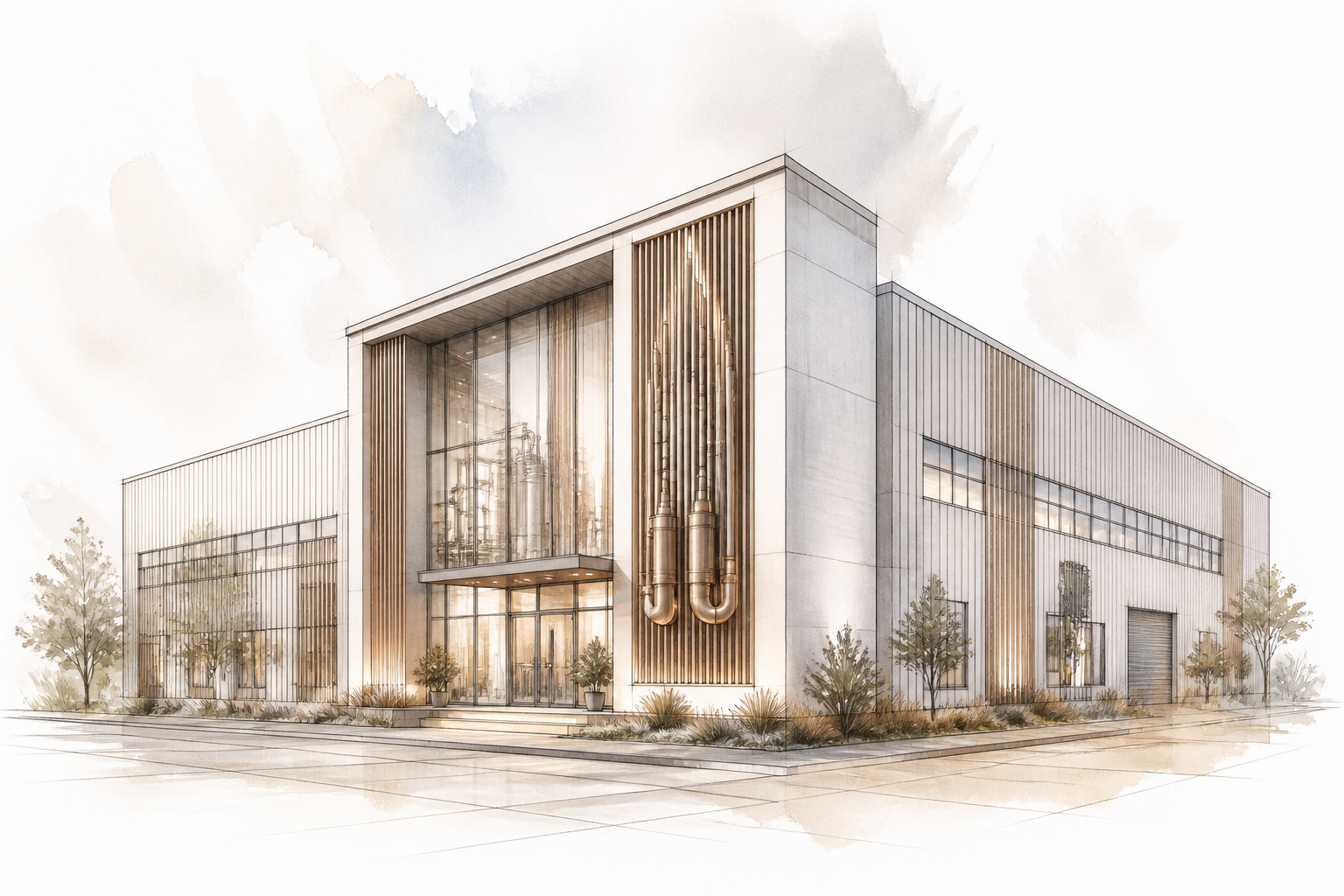
Catalyst Plant Financial Model
Description
The financial model is designed for the construction and operation of a chemical plant producing industrial catalysts—such as those used in refining, petrochemicals, and emission control. It accommodates a multi-grade portfolio with recipe-driven production, including steps like precipitation, calcination, and coating. Operations can be modelled as both continuous runs and campaign-based batches, reflecting real-world scheduling constraints.
At the core of the model lies detailed raw material management. It distinguishes between bulk chemicals, carrier materials, and precious metals, capturing spot vs. contract pricing, metal lease rates, and tolling conversion fees. A closed mass balance reconciles input materials with finished output, yield losses, and metal recovery streams, directly linking process efficiency to financial performance.
The revenue side incorporates complex customer contract structures: take-or-pay commitments, price formulas indexed to metal markets, and performance guarantees with liquidated damages. The model covers the entire project lifecycle—CAPEX phasing with long-lead equipment, a start-up ramp that includes catalyst qualification and performance testing, and working capital build-up for precious metal pools and consignment inventory at client sites.
Modeling specifics
- Recipe-based production planning for multiple catalyst grades, with dynamic raw material consumption that adjusts automatically when product mix changes.
- Precious metal cost module distinguishing owned metal inventories, leased metal pools, and customer-supplied metal under tolling arrangements, including lease rate curves.
- Mass balance and yield model that accounts for material losses in each process step, metal recovery from spent catalyst, and quality control reject recycling—driving direct COGS accuracy.
- Customer contract engine covering take-or-pay minimum volumes, performance-based bonuses and liquidated damages, and price adjustment formulas linked to metal indices.
- Start-up and qualification ramp that delays full capacity until after catalyst validation and performance runs, preventing early revenue overstatement.
- Environmental cost block that captures emissions treatment, waste disposal, and related compliance costs, which often represent a material operating expense in catalyst manufacturing.
What's included in the base version
- Multi-product recipe engine with BOM-driven raw material calculation
- Raw material cost module (bulk chemicals, carriers, precious metals with lease instruments)
- Yield and mass balance model with material loss and metal recovery loops
- Revenue module with take-or-pay contracts, metal-indexed pricing, and liquidated damages
- CAPEX schedule with equipment phasing, long-lead items, and depreciation waterfall
- Fixed and semi-variable OPEX: QC lab, catalyst testing, maintenance, environmental compliance
- Working capital construction (metal inventory, consignment stock, receivables, payables)
- Integrated three-statement model (P&L, cash flow, balance sheet)
- Scenario manager and sensitivity tables for metal prices, yields, and capacity utilization
Common modeling mistakes
- Assuming 100% product yield without accounting for quality control rejects and material losses — actual yields can range from 85 to 95%, leading to overstated output and inflated metal recovery by 5–15%.
- Modelling precious metal costs as a simple raw material purchase instead of using lease and toll instruments — ignores lease financing costs that add 3–7% to metal-related expenses, understating COGS and distorting cash flows.
- Neglecting the ramp-up period with performance qualification and catalyst validation batches — delays full capacity attainment by 6–12 months, causing early revenue to be overestimated and misrepresenting the cash profile.
- Applying fixed customer offtake rates without stress-testing potential under-lifting under take-or-pay contracts — can overstate contracted revenues by 10–20% in conservative scenarios and mask liquidity risks.