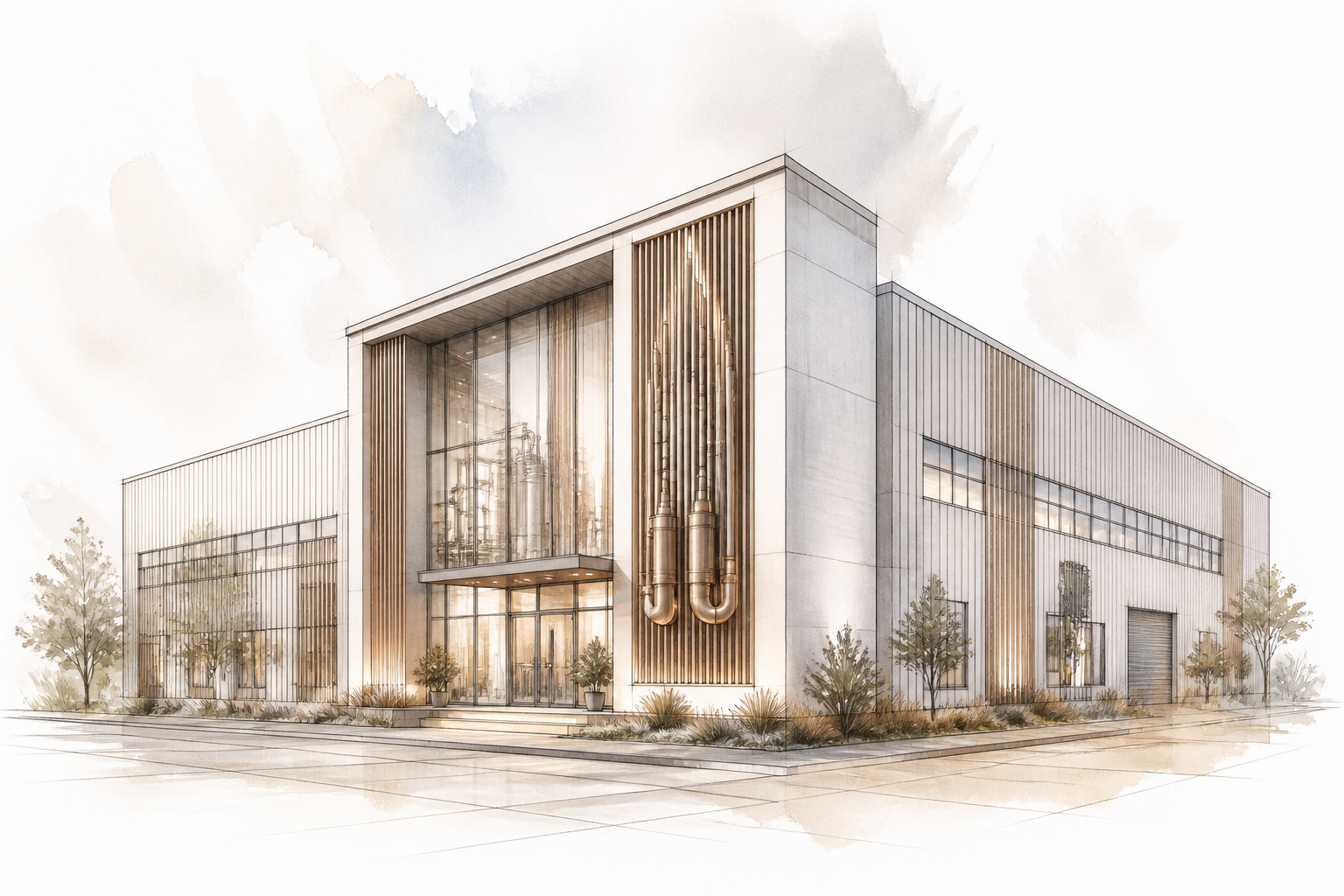
Compressed Gas Cylinder Plant Financial Model
Description
The model reflects a vertically integrated compressed gas cylinder manufacturing facility producing seamless and welded cylinders for industrial, medical, and specialty gases. From raw steel or aluminum feedstock to finished, stamped, and painted cylinders, the plant encompasses a full production cycle with multiple process steps and intermediate WIP stages. The typical investment magnitude places the project within the medium-to-large manufacturing segment, requiring substantial capital allocation to deep-drawing hydraulic presses, spinning and welding lines, heat treatment furnaces, hydrostatic and pneumatic testing stations, and surface treatment setups.
Production is modelled not as a single throughput but as a sequence of capacity-constrained unit operations, each with its own yield, cycle time, changeover duration, and labour/utility consumption. The model explicitly incorporates scrap and rework rates at each step, as well as the effect of testing rejections — particularly in the hydrostatic test bay, where cylinder failure leads to permanent loss and retesting overhead. Multi-product handling is accounted for: different cylinder sizes, wall thicknesses, pressure ratings, and valve configurations all generate distinct material BOMs, machine occupancy, and working capital dynamics.
On the commercial side, the model captures the interplay between raw material price volatility (hot-rolled coil, billets, or aluminum ingots), batch-driven order fulfilment, and fluctuation in demand from gas distributors and OEMs. It addresses the working capital lock-up from semi-finished cylinders accumulating between stations and the additive effect of mandatory certification renewals, periodic retooling, and compliance-driven documentation on the P&L. The result is a realistic cash flow profile that reveals the true capital intensity and margin sensitivity of the business far beyond generic manufacturing templates.
Modeling specifics
- Stepwise production routing with individual throughput, scrap, and rework rates per operation — avoids the 'black box capacity' simplification and reveals real bottleneck constraints.
- Multi-product BOM and routing assignment: each cylinder type (e.g., 10L oxygen, 40L LPG, 50L acetylene) pulls a distinct material specification, machine sequence, and cycle time.
- Hydrostatic and pneumatic test simulation with probabilistic reject rates and consequential rework/retest loops, including the impact on production yield and cost of non-conformance.
- Raw material price hedging and pass-through logic: allows modelling of fixed supply contracts vs. spot buying, with scenario switches for steel/aluminium price shocks.
- Batch production scheduling and WIP inventory build-up model that calculates inter-process buffer sizing and the resulting cash tied up in semi-finished cylinders.
- Regulatory compliance cost amortisation: periodic burdens like cylinder re-qualification, ISO audit fees, stamping die replacement, and paint-line filter changes are spread over batches.
- Energy intensity modelling per unit: electricity, natural gas, and water consumption tracked per station, enabling accurate utility cost forecasting and sensitivity to tariff changes.
- Shift-based crew sizing with wage differentials for skilled testing/QC personnel, capturing the semi-variable nature of direct labour as output and product mix change.
What's included in the base version
- Plant capacity definition and equipment specification sheet with CAPEX phasing
- Detailed production plan with product mix, annual output, and batch targets
- Personnel plan by department (production, quality, maintenance, administration)
- Bill of Materials and raw material cost model with inventory procurement logic
- Utility consumption and cost calculation (electricity, gas, water)
- Revenue model with cylinder type pricing, sales volume, and payment terms
- Direct and indirect operating expenses (consumables, spare parts, logistics, SG&A)
- Corporate income tax, VAT treatment, and depreciation schedules
- Debt financing module with drawdowns, grace period, and repayment
- Integrated financial statements (P&L, cash flow, balance sheet) and investment metrics (IRR, NPV, payback)
Common modeling mistakes
- Treating production as a black box without stepwise yields — final cylinder output overestimated by 15–25% once scrap and test rejects are cumulatively accounted for.
- Modelling raw material cost as a flat annual rate — steel price volatility alone can swing material costs by 10–15% year-on-year, wiping out margins if unhedged.
- Ignoring hydrostatic test rejection rates — industry failure rates of 2–5% create both direct material losses and retesting expenses, adding up to 3–7% to unit cost.
- Neglecting batch production scheduling and WIP accumulation — tied-up cash in semi-finished cylinders inflates working capital needs by 30–50% versus a naive instantaneous throughput model.
- Assuming all labour is purely variable — skilled QC, pressure vessel welders, and test operators are semi-fixed; underestimating labour cost by 10–20% when output fluctuates.